
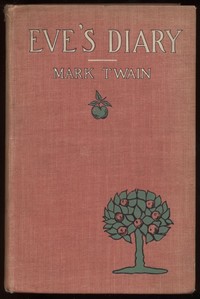
Eve's Diary, Complete
Written by Mark Twain
Chaptra reads alongside you — AI insights, chapter breakdowns and reader discussions for every book. Join free
About this book
Reading guide
Themes, characters and key ideas in Eve's Diary, Complete, written by Chaptra AI.
- about 3 hours
- intermediate
- humorous
- philosophical
- poignant
Mark Twain's "Eve's Diary, Complete" offers a humorous and poignant retelling of the Garden of Eden story from the perspective of Eve, the first woman. Through her diary entries, Eve chronicles her initial curiosity about the world, her observations of Adam, and her evolving understanding of existence, love, and sorrow. The narrative playfully subverts traditional biblical accounts, presenting Eve as an intelligent, observant, and deeply emotional individual. It explores the complexities of early human relationships, gender roles, and the journey from innocence to experience, all imbued with Twain's characteristic wit and philosophical insight.
“I am the only person in the world. I am very new, of course, but I am perfectly well.”
Key themes
- Love and Companionship
- The central emotional journey of the book is Eve's development of deep love for Adam. Beginning with indifference, even annoyance, her feelings evolve into a profound, enduring affection that transcends their initial differences and the hardships of life outside Eden. It emphasizes the human need for connection and the transformative power of love.
- Gender Roles and Differences
- Twain humorously explores the perceived differences between men and women through Eve's observations of Adam. Eve is portrayed as more emotional, curious, and aesthetically inclined, while Adam is depicted as practical, logical, and less communicative. The theme highlights how these differences, initially sources of friction, ultimately contribute to a complementary partnership.
- Innocence, Experience, and the Human Condition
- The narrative traces Eve's journey from a state of pure, unblemished innocence in the Garden to the complexities of experience, including love, motherhood, and profound sorrow, after the Fall. Twain uses this progression to explore the bittersweet nature of the human condition, where knowledge and love often come hand-in-hand with pain and loss.
Worth discussing
How does Twain's portrayal of Eve challenge or reinforce traditional interpretations of the biblical story of creation and the Fall?
Chapter-by-chapter breakdowns, character arcs and the full thematic analysis come with a free account.
Discussions
No one has started one yet
Questions this book opens up
No discussions yet
Be the first to start a discussion about this book!
Sign up to start the discussionReviews
No reviews yet
Be the first to review this book!