
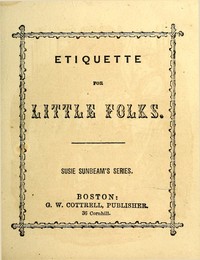
Etiquette for Little Folks
Written by Henry S. Mackarness
Chaptra reads alongside you — AI insights, chapter breakdowns and reader discussions for every book. Join free
About this book
Reading guide
Themes, characters and key ideas in Etiquette for Little Folks, written by Chaptra AI.
- about 8 hours
- beginner
- Instructive
- Formal
- Moralistic
“Etiquette for Little Folks” by Mrs. Henry S. Mackarness is a mid-19th-century manual designed to instruct children in proper social behavior and decorum. This didactic guide outlines fundamental rules for young people across various settings, including home, school, and public spaces, emphasizing the cultivation of good manners, respect for others, and appropriate conduct. Through concise instructions and specific behavioral expectations, the book aims to instill virtues like humility, civility, and moral integrity, preparing children to navigate society gracefully. It serves as a foundational text for shaping polite individuals and laying the groundwork for refined adult demeanor in Victorian England.
“Always remember to bow respectfully to your elders and superiors, for it shows humility and good breeding.”
Key themes
- Manners and Propriety
- This is the overarching theme, as the entire book is dedicated to outlining and instilling proper social conduct. It covers everything from table manners to public behavior, emphasizing the importance of outward decorum as a reflection of inner character. The book posits that good manners are essential for harmonious social interaction and personal advancement.
- Respect for Authority and Elders
- The book heavily emphasizes deference and obedience towards parents, teachers, and any figure of authority or seniority. Children are taught to listen, not interrupt, and follow instructions without question, reflecting the hierarchical social structure of the Victorian era. This theme is crucial for maintaining order within the family and broader community.
- Social Order and Harmony
- The cumulative effect of all the etiquette rules is to ensure a smoothly functioning and harmonious society. By teaching children to understand and adhere to their social roles and expected behaviors, the book contributes to the maintenance of established social structures and minimizes friction in interactions. It promotes a sense of collective responsibility for public decorum.
Worth discussing
How do the etiquette rules in this book compare to modern expectations for children's behavior?
Chapter-by-chapter breakdowns, character arcs and the full thematic analysis come with a free account.
Discussions
No one has started one yet
Questions this book opens up
No discussions yet
Be the first to start a discussion about this book!
Sign up to start the discussionReviews
No reviews yet
Be the first to review this book!