
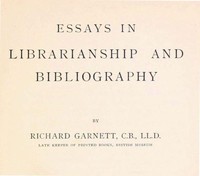
Essays in Librarianship and Bibliography
Written by Richard Garnett
Chaptra reads alongside you — AI insights, chapter breakdowns and reader discussions for every book. Join free
About this book
Reading guide
Themes, characters and key ideas in Essays in Librarianship and Bibliography, written by Chaptra AI.
- about 8 hours
- advanced
- Informative
- Scholarly
- Analytical
Richard Garnett's "Essays in Librarianship and Bibliography" is a pivotal late 19th-century collection offering a comprehensive look into the evolving world of library science. Comprising occasional pieces, the book delves into the historical trajectory of libraries, critically examining contemporary cataloguing practices, and advocating for the integration of scientific methods into library management. Garnett reflects on significant technological advancements, such as printed catalogues and photographic reproduction, and their impact on efficiency and accessibility, particularly within institutions like the British Museum. The compilation serves as both a historical record and a forward-looking critique, emphasizing the importance of systematic processes and innovation in shaping modern librarianship. It remains a valuable resource for understanding the foundational principles and historical context of the field.
“The true purpose of a library is not merely to collect books, but to make them accessible and useful.”
Key themes
- Historical Development of Libraries
- The book extensively traces the evolution of libraries, examining how they have changed over time in terms of structure, purpose, and management. Garnett provides context for contemporary practices by looking back at the traditions and innovations that shaped libraries.
- Cataloguing and Classification Practices
- A core focus of the essays is the methodology and philosophy behind organizing library collections. Garnett delves into the intricacies of cataloguing, particularly the transition to printed catalogues, and advocates for standardized, scientific approaches to make resources discoverable.
- Technological Innovation in Librarianship
- Garnett highlights the crucial role of new technologies in improving library efficiency and accessibility. He discusses specific innovations of his time, such as mechanical storage solutions and photographic reproduction, and their potential to revolutionize library services.
Worth discussing
How do Garnett's arguments for systematic processes and scientific methods in librarianship resonate with modern information science practices?
Chapter-by-chapter breakdowns, character arcs and the full thematic analysis come with a free account.
Discussions
No one has started one yet
Questions this book opens up
No discussions yet
Be the first to start a discussion about this book!
Sign up to start the discussionReviews
No reviews yet
Be the first to review this book!