
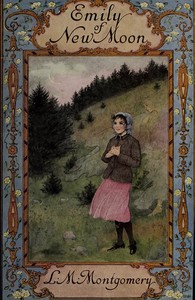
Emily of New Moon
Written by L. M. (Lucy Maud) Montgomery
Chaptra reads alongside you — AI insights, chapter breakdowns and reader discussions for every book. Join free
About this book
Reading guide
Themes, characters and key ideas in Emily of New Moon, written by Chaptra AI.
- about 10 hours
- intermediate
- poignant
- imaginative
- reflective
L. M. Montgomery's "Emily of New Moon" introduces Emily Starr, a spirited and imaginative orphan whose life is irrevocably changed after her beloved father's death. Sent to live with her stern and traditional Murray relatives at the isolated New Moon farm, Emily struggles to reconcile her artistic temperament and deep connection to nature with the rigid expectations of her new home. The novel chronicles her formative years, exploring her blossoming friendships, her fervent desire to become a writer, and her journey to find acceptance and belonging while fiercely guarding her unique identity. It's a poignant coming-of-age story that delves into themes of creativity, loss, and the enduring power of imagination.
“"I'm going to be a writer. I've known it all my life."”
Key themes
- Creativity and Imagination
- This is the central theme, exploring Emily's inherent artistic nature, her 'flash' of inspiration, and her unwavering drive to write. It delves into how imagination serves as a coping mechanism, a way of understanding the world, and the core of her identity, often clashing with practical realities.
- Loss and Grief
- The novel opens with the profound loss of Emily's beloved father, which sets the entire narrative in motion. It explores the stages of grief, the loneliness of orphanhood, and how individuals find ways to cope with immense sorrow, often through memory and creative expression.
- Belonging and Identity
- Emily's journey is fundamentally about finding her place in the world after being uprooted. She struggles to reconcile her unique identity and artistic aspirations with the traditional expectations of her Murray relatives, seeking both acceptance and the freedom to be herself.
Worth discussing
How does Emily's imagination serve as both a refuge and a challenge in her life?
Chapter-by-chapter breakdowns, character arcs and the full thematic analysis come with a free account.
Discussions
No one has started one yet
Questions this book opens up
No discussions yet
Be the first to start a discussion about this book!
Sign up to start the discussionReviews
No reviews yet
Be the first to review this book!