
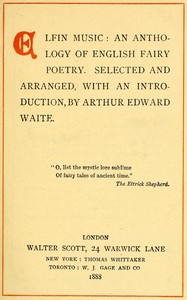
Elfin music : $b An anthology of English fairy poetry
Written by Unknown author
Chaptra reads alongside you — AI insights, chapter breakdowns and reader discussions for every book. Join free
About this book
This literary work offers readers a unique perspective on the human experience. The narrative explores themes of english poetry and fairy poetry, english.
Reading guide
Themes, characters and key ideas in Elfin music : $b An anthology of English fairy poetry, written by Chaptra AI.
- about 8 hours
- intermediate
- mysterious
- whimsical
- enchanting
Elfin Music: An Anthology of English Fairy Poetry is a curated collection that delves into the rich tradition of fairy lore within English verse. Spanning various historical periods, this anthology brings together diverse poetic voices to explore the whimsical, mysterious, and often darker aspects of the fae realm. It serves as a comprehensive showcase of how English poets have imagined, interpreted, and interacted with the supernatural world of elves, pixies, and other magical beings, reflecting evolving cultural perceptions and literary styles. The collection emphasizes the enduring power of myth and imagination in shaping poetic expression, making it a valuable resource for understanding a specific niche within English literary history.
“As this is an anthology without specific text provided, direct quotes cannot be given. However, representative phrases that capture the essence of English fairy poetry would include lines evocative of moonlight, secret groves, tiny bells, ephemeral beauty, mischievous laughter, enchanted sleep, or the thin veil between worlds. For example, 'Where the bee sucks, there suck I' (from Shakespeare's Ariel) or 'Come away, O human child! To the waters and the wild' (from Yeats' 'The Stolen Child') exemplify the themes and imagery expected within such a collection.”
Key themes
- Nature and the Supernatural
- This theme explores the profound connection between the natural world and the realm of the fae. Fairies are almost always depicted residing in wild, untamed spaces—forests, glades, hills, and waterways—embodying the spirits of these places. The poems often use natural imagery to evoke the magical, suggesting that the supernatural is not separate from nature but an intrinsic, hidden aspect of it. This highlights a pre-industrial reverence for wildness and the belief in animating spirits within the landscape.
- Imagination vs. Reality
- Many poems in the anthology blur the lines between what is real and what is imagined, questioning the nature of perception. Fairies often exist on the fringes of human sight, appearing in dreams, visions, or moments of heightened sensitivity. This theme explores the power of the human imagination to create or perceive other worlds, and whether the belief in fairies is a testament to an unseen reality or a beautiful projection of the human mind onto nature. It often touches on the idea that childhood innocence allows for a greater connection to this imaginative realm.
- Enchantment and Danger
- The fairy world, while alluring and beautiful, is frequently portrayed as inherently dangerous for mortals. This theme highlights the double-edged sword of enchantment: the seductive beauty, magical gifts, and freedom offered by the fae often come with a price, such as lost time, forgotten memories, abduction, or even death. It explores the psychological pull of the forbidden or the unknown, and the consequences of crossing boundaries between worlds. This duality reflects deeper human anxieties about temptation, loss of control, and the perils of venturing beyond the familiar.
Worth discussing
How do different poets in the anthology portray the physical characteristics and moral ambiguity of fairies?
Chapter-by-chapter breakdowns, character arcs and the full thematic analysis come with a free account.
Discussions
No one has started one yet
Questions this book opens up
No discussions yet
Be the first to start a discussion about this book!
Sign up to start the discussionReviews
No reviews yet
Be the first to review this book!