
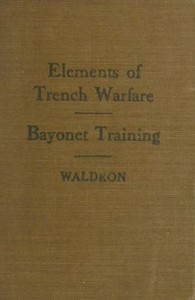
Elements of Trench Warfare: Bayonet Training
Written by William H. (William Henry) Waldron
Chaptra reads alongside you — AI insights, chapter breakdowns and reader discussions for every book. Join free
About this book
Reading guide
Themes, characters and key ideas in Elements of Trench Warfare: Bayonet Training, written by Chaptra AI.
- about 8 hours
- intermediate
- instructive
- serious
- urgent
Elements of Trench Warfare: Bayonet Training by William H. Waldron is a crucial early 20th-century military manual designed to equip soldiers with the practical knowledge needed for World War I trench combat. It systematically details trench organization, defensive structures, and tactical applications, emphasizing the interconnectedness of these elements for effective strategy. The manual's core focus shifts from structural understanding to specific combat training, with a significant portion dedicated to bayonet techniques. Written for field use, its objective is to provide soldiers with essential, easily accessible instructions to navigate and survive the brutal realities of trench warfare, making it a vital historical document on military preparedness.
“This book is designed for practical use, ensuring the soldier can easily carry it into the field and refer to it as needed.”
Key themes
- Practicality and Survival
- The manual's overriding theme is the absolute necessity of practical knowledge and skills for survival in the brutal environment of trench warfare. Every instruction, from trench layout to bayonet technique, is presented as a direct means to enhance a soldier's chances of living through combat. It strips away any romantic notions of war, focusing solely on the mechanics of staying alive and effectively engaging the enemy.
- Discipline and Training
- Waldron strongly emphasizes that rigorous, disciplined training is the cornerstone of an effective soldier. The manual itself is an instrument of this discipline, providing a structured curriculum designed to instill automatic, instinctive responses crucial under fire. It suggests that through repetitive practice, soldiers can overcome fear and perform their duties with precision.
- Adaptation to Modern Warfare
- The manual directly addresses the unprecedented challenges posed by World War I, particularly the static, attritional nature of trench warfare. It represents an attempt by military strategists to adapt traditional combat principles to new technologies and battlefield conditions. It acknowledges the shift from open-field maneuvers to fortified, interconnected defensive lines and the necessity of specialized skills for this new environment.
Worth discussing
How does Waldron's manual reflect the specific challenges and conditions of World War I trench warfare?
Chapter-by-chapter breakdowns, character arcs and the full thematic analysis come with a free account.
Discussions
No one has started one yet
Questions this book opens up
No discussions yet
Be the first to start a discussion about this book!
Sign up to start the discussionReviews
No reviews yet
Be the first to review this book!