
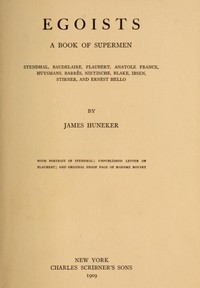
Egoists, A Book of Supermen: Stendhal, Baudelaire, Flaubert, Anatole France, Huysmans, Barrès, Nietzsche, Blake, Ibsen, Stirner, and Ernest Hello
Written by James Huneker
Chaptra reads alongside you — AI insights, chapter breakdowns and reader discussions for every book. Join free
About this book
Reading guide
Themes, characters and key ideas in Egoists, A Book of Supermen: Stendhal, Baudelaire, Flaubert, Anatole France, Huysmans, Barrès, Nietzsche, Blake, Ibsen, Stirner, and Ernest Hello, written by Chaptra AI.
- about 8 hours
- advanced
- Intellectual
- Analytical
- Insightful
James Huneker's "Egoists, A Book of Supermen" is an early 20th-century collection of incisive literary essays that delves into the lives and works of pivotal figures in literature and philosophy. Through a critical and often biographical lens, Huneker explores the unique psychological makeup, intellectual contributions, and often contradictory personalities of individuals he deems "supermen," such as Stendhal, Baudelaire, Flaubert, and Nietzsche. The collection illuminates how these figures' idiosyncrasies and profound insights shaped their artistic and philosophical legacies, challenging conventional norms and expanding the boundaries of human thought. It serves as both a historical record of literary criticism and a timeless exploration of genius and individuality.
“Stendhal's delicate psychological insights often stood in stark contrast to his unremarkable physical appearance, a duality that mirrored the complexity of his own soul.”
Key themes
- Individualism and Genius
- Central to the book's premise, this theme explores what constitutes exceptionalism and genius. Huneker examines how his 'supermen' defied societal norms, pursued unique visions, and left indelible marks on culture through their singular intellect and will. It delves into the nature of the 'egoist' as a creative, transformative force.
- The Interplay of Life and Art
- This theme investigates the profound connection between an artist's personal life, psychological makeup, and their creative output. Huneker consistently demonstrates how the eccentricities, experiences, and internal conflicts of his subjects directly informed and shaped their literary and philosophical works.
- Duality and Contradiction
- Huneker frequently identifies and explores the paradoxical nature of his 'supermen,' showcasing how seemingly contradictory traits (e.g., passion and cynicism, detachment and intense emotion) are not weaknesses but essential components of their depth, complexity, and creative power. This theme suggests that genius often thrives on internal tension.
Worth discussing
How does Huneker define a 'superman,' and do his chosen figures consistently embody this definition?
Chapter-by-chapter breakdowns, character arcs and the full thematic analysis come with a free account.
Discussions
No one has started one yet
Questions this book opens up
No discussions yet
Be the first to start a discussion about this book!
Sign up to start the discussionReviews
No reviews yet
Be the first to review this book!