
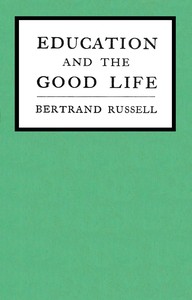
Education and the good life
Written by Bertrand Russell
Chaptra reads alongside you — AI insights, chapter breakdowns and reader discussions for every book. Join free
About this book
Reading guide
Themes, characters and key ideas in Education and the good life, written by Chaptra AI.
- about 8 hours
- intermediate
- Philosophical
- Analytical
- Reformist
Bertrand Russell's "Education and the Good Life" is a foundational philosophical treatise advocating for a radical overhaul of educational systems to foster both robust character and keen intelligence in children. Written from a parent's perspective, Russell critiques existing educational flaws and proposes a democratic, inclusive model that prioritizes independent judgment and holistic development. The book integrates modern psychological insights, especially concerning early childhood, to lay principles for nurturing individuals who are both knowledgeable and virtuous. Ultimately, Russell aims to equip children for a fulfilling existence and active participation in creating a just society.
“The good life is one inspired by love and guided by knowledge.”
Key themes
- Character Development and Moral Education
- Russell argues that the cultivation of character—encompassing fundamental virtues like courage, vitality, sensitivity, and justice—is paramount, superseding even the mere accumulation of factual knowledge. He critiques methods that seek to instill morality through fear or rigid dogma, advocating instead for an educational environment that naturally fosters these traits through understanding, exemplary behavior, and the development of independent ethical judgment. This theme is absolutely central to his comprehensive definition of a 'good life.'
- Intellectual Freedom and Critical Thinking
- A cornerstone of Russell's philosophy, this theme stresses the paramount importance of an education that actively encourages questioning, independent inquiry, and the autonomous formation of one's own judgments, rather than the passive acceptance of information or dogma. He views the suppression of innate curiosity and critical thought as profoundly detrimental to both individual growth and societal progress, advocating for an educational environment where doubt is embraced as a powerful catalyst for deeper understanding and innovation.
- The Role of Parents and Early Childhood Education
- Russell places significant and profound emphasis on the formative years of a child's life and the unparalleled influence of parents and early educators. He delves into the complex psychological needs of young children, the critical importance of a nurturing and stimulating environment, and the potential pitfalls of both excessive indulgence and overly harsh discipline. He views parents as the primary architects of a child's initial character, emotional stability, and intellectual curiosity, advocating for informed, responsible, and empathetic parenting practices.
Worth discussing
How does Russell define 'the good life,' and what specific role does education play in its attainment? Do you agree with his comprehensive definition?
Chapter-by-chapter breakdowns, character arcs and the full thematic analysis come with a free account.
Discussions
No one has started one yet
Questions this book opens up
No discussions yet
Be the first to start a discussion about this book!
Sign up to start the discussionReviews
No reviews yet
Be the first to review this book!