
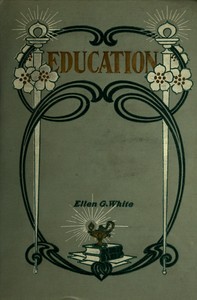
Education
Written by Ellen Gould Harmon White
Chaptra reads alongside you — AI insights, chapter breakdowns and reader discussions for every book. Join free
About this book
Reading guide
Themes, characters and key ideas in Education, written by Chaptra AI.
- about 12 hours
- advanced
- uplifting
- instructive
- philosophical
Ellen G. White's "Education" is a seminal early 20th-century treatise advocating for a holistic approach to learning that transcends mere academic instruction. It posits that true education is a divine process aimed at the harmonious development of an individual's spiritual, mental, and physical faculties. The book emphasizes character building, moral integrity, and a deep understanding of one's relationship with God as central to preparing individuals not only for a purposeful earthly life but also for eternity. White argues for a return to foundational principles of learning, drawing inspiration from the Edenic model where God Himself was humanity's instructor.
“True education means more than the pursuing of a certain course of study. It means more than a preparation for the life that now is. It has to do with the whole being, and with the whole period of existence possible to man. It is the harmonious development of the physical, the mental, and the spiritual powers.”
Key themes
- Holistic Education
- This is the central theme, emphasizing the harmonious development of an individual's spiritual, mental, and physical faculties. White argues against an education focused solely on intellectualism, asserting that true learning involves the entire being and prepares individuals for all aspects of life and eternity.
- Character Development and Moral Integrity
- White places character building at the core of education, asserting that moral integrity, self-control, and adherence to divine principles are more valuable than intellectual prowess. Education's ultimate goal is to cultivate virtuous individuals who are true to duty and God.
- Divine Wisdom and Revelation
- This theme posits that God is the ultimate source of all true knowledge and wisdom, and that His revelation (in the Bible and nature) should form the foundation of all educational pursuits. Learning is seen as a process of understanding God's character and purposes.
Worth discussing
How does White's definition of 'true education' compare with modern educational goals and practices?
Chapter-by-chapter breakdowns, character arcs and the full thematic analysis come with a free account.
Discussions
No one has started one yet
Questions this book opens up
No discussions yet
Be the first to start a discussion about this book!
Sign up to start the discussionReviews
No reviews yet
Be the first to review this book!