
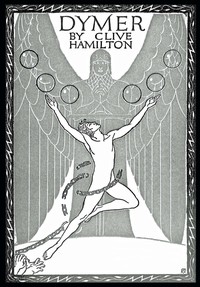
Dymer
Written by C. S. (Clive Staples) Lewis
Chaptra reads alongside you — AI insights, chapter breakdowns and reader discussions for every book. Join free
About this book
Reading guide
Themes, characters and key ideas in Dymer, written by Chaptra AI.
- about 10 hours
- advanced
- philosophical
- mythic
- rebellious
C. S. Lewis's "Dymer" is an early narrative poem that chronicles the titular protagonist's journey of self-discovery and rebellion against the repressive, puritanical strictures of the 'Perfect City.' Dymer's initial act of violent liberation propels him into a wild natural landscape, where he sheds societal constraints and grapples with primal forces. His adventures involve the slaying of a monstrous creature, from whose body a beautiful woman emerges, leading to a complex exploration of love, creation, and the consequences of his actions. The poem ultimately delves into the interplay of freedom, order, guilt, and the search for an authentic existence beyond rigid dogma, marking a significant early exploration of themes central to Lewis's later works.
“He knew the Perfect City, knew its code / Of laws that governed every thought and deed.”
Key themes
- Freedom vs. Order/Authority
- This is the central tension of the poem. Dymer's initial life in the Perfect City represents stifling, absolute order where individual freedom and emotional spontaneity are suppressed. His rebellion and flight into nature symbolize a quest for unbridled freedom. However, the narrative explores the complexities, suggesting that absolute freedom without responsibility can also lead to chaos or unforeseen consequences, hinting at a necessary balance between the two.
- Creation from Destruction / Good and Evil
- A profound and paradoxical theme explored through the central event of the monster's slaying and the subsequent birth of the beautiful woman. This challenges simplistic notions of good and evil, suggesting that creation can emerge from destruction, and that acts perceived as 'evil' (like Dymer's violence) can have unexpected, beautiful, and life-affirming consequences. It hints at a cyclical nature of existence where death paves the way for new life, and morality is more complex than black and white.
- Love and Transformation
- Love, particularly romantic love, acts as a powerful transformative force for Dymer. His initial rebellion is driven by a desire for freedom from societal constraints, but his love for the woman born from the monster imbues his existence with new meaning, responsibility, and depth. This love contrasts sharply with the sterile, regulated 'affections' of the Perfect City, highlighting its capacity to humanize and fulfill.
Worth discussing
How does Lewis define 'freedom' in the context of Dymer's journey, and how does it evolve from his initial rebellion to his later actions?
Chapter-by-chapter breakdowns, character arcs and the full thematic analysis come with a free account.
Discussions
No one has started one yet
Questions this book opens up
No discussions yet
Be the first to start a discussion about this book!
Sign up to start the discussionReviews
No reviews yet
Be the first to review this book!