
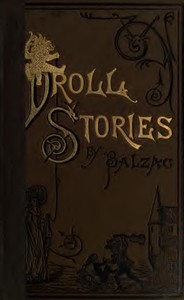
Droll Stories — Complete: Collected from the Abbeys of Touraine
Written by Honoré de Balzac
Chaptra reads alongside you — AI insights, chapter breakdowns and reader discussions for every book. Join free
About this book
Reading guide
Themes, characters and key ideas in Droll Stories — Complete: Collected from the Abbeys of Touraine, written by Chaptra AI.
- about 15 hours
- advanced
- humorous
- satirical
- bawdy
Honoré de Balzac's "Droll Stories — Complete" is a vibrant collection of early 19th-century tales, masterfully set against the backdrop of 16th-century France. Through sharp wit and keen observations, Balzac explores the intricate dance of love, lust, and morality among a colorful cast of priests, courtesans, and noblemen in Touraine. The collection is celebrated for its rich historical context, playful yet incisive social commentary, and a style that blends robust humor with a subtle critique of human foibles. It invites readers into a world where desires clash with societal expectations, offering both entertainment and profound insights into the timeless aspects of the human condition.
“A priest, like any man, is but flesh and blood, though his robes pretend otherwise.”
Key themes
- Hypocrisy and Moral Contradiction
- This is a central theme, particularly evident in the portrayal of the clergy who preach abstinence and piety while indulging in gluttony, lust, and other earthly pleasures. Balzac uses these contradictions to satirize the gap between declared ideals and human reality, suggesting that societal roles often mask genuine human desires.
- The Nature of Desire (Love and Lust)
- Balzac explores the powerful and often uncontrollable forces of love and lust, depicting them as fundamental drivers of human action. The stories frequently highlight the fine line between genuine affection and carnal desire, and how these passions can lead to both folly and ingenuity. Desire is often presented as a natural, irrepressible force that defies societal and religious constraints.
- Social Satire and Class Differences
- Beyond the clergy, Balzac uses the collection to satirize the broader social structures and customs of 16th-century France. He highlights the distinct behaviors, values, and follies of different classes—noblemen, commoners, and the Church—often contrasting their perceived virtues with their actual conduct. The humor often derives from the absurdities created by rigid social hierarchies and the attempts to circumvent them.
Worth discussing
How does Balzac use humor and satire to critique the institutions and morality of 16th-century France, particularly the clergy?
Chapter-by-chapter breakdowns, character arcs and the full thematic analysis come with a free account.
Discussions
No one has started one yet
Questions this book opens up
No discussions yet
Be the first to start a discussion about this book!
Sign up to start the discussionReviews
No reviews yet
Be the first to review this book!