
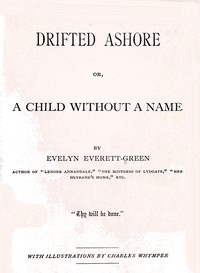
Drifted ashore; $b or, a child without a name
Written by Evelyn Everett-Green
Chaptra reads alongside you — AI insights, chapter breakdowns and reader discussions for every book. Join free
About this book
Reading guide
Themes, characters and key ideas in Drifted ashore; $b or, a child without a name, written by Chaptra AI.
- about 8 hours
- intermediate
- mysterious
- hopeful
- melancholy
Evelyn Everett-Green's "Drifted Ashore; or, A Child Without a Name" is a poignant late 19th-century novel centered on Bertie, a young boy found unconscious on a desolate shore after a violent storm. Taken in by a compassionate fisherwoman and befriended by her son, David, Bertie grapples with profound amnesia, his mysterious origins shrouded in the 'darker realities' of a forgotten past. The narrative masterfully weaves together themes of identity, belonging, and the search for family, contrasting the boy's unknown aristocratic heritage with his humble, yet loving, new life. As Bertie slowly recovers, he must navigate the uncertainties of his past while forging deep bonds that redefine his understanding of home and kinship.
“The sea gives and the sea takes, but sometimes, it gives back more than it claims.”
Key themes
- Identity and Belonging
- This is the central theme, explored through Bertie's amnesia and his desperate search for who he truly is. The novel questions whether identity is inherent (based on birthright and past) or constructed (based on experiences, relationships, and choices). It emphasizes that true belonging comes from acceptance and love, rather than simply knowing one's origins.
- Compassion and Found Family
- The novel powerfully illustrates the transformative power of human kindness and the idea that family can be forged through love and shared experience, rather than solely through bloodlines. The fisherwoman's selfless act of taking in a stranger defines this theme, creating a new family unit based on empathy and care.
- Memory and the Past
- Bertie's amnesia is the central mystery, driving the plot and forcing him to confront the absence of his personal history. The novel explores how memory shapes identity and how the past, even when forgotten, can exert a powerful influence on the present. It also touches on the idea of selective memory or the psychological process of repressing traumatic events.
Worth discussing
How does the novel explore the concept of identity when one's past is unknown? Is identity more about origin or experience?
Chapter-by-chapter breakdowns, character arcs and the full thematic analysis come with a free account.
Discussions
No one has started one yet
Questions this book opens up
No discussions yet
Be the first to start a discussion about this book!
Sign up to start the discussionReviews
No reviews yet
Be the first to review this book!