
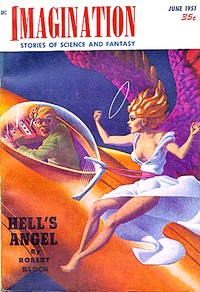
Double Identity
Written by Henry Farrell
Chaptra reads alongside you — AI insights, chapter breakdowns and reader discussions for every book. Join free
About this book
Reading guide
Themes, characters and key ideas in Double Identity, written by Chaptra AI.
- about 8 hours
- intermediate
- noir
- philosophical
- metafictional
Henry Farrell's "Double Identity," though attributed to Charles F. Myers in the provided summary, is a groundbreaking science fiction narrative from the early 1950s that blurs the lines between creator and creation. It follows Fleetwood Cassidy, a hard-boiled private detective who shockingly realizes he is a fictional character, an invention of writer Grant Dermitt. As Fleetwood navigates his noir world, populated by figures like the henchman Mario and femme fatale Evelyn, he grapples with the existential absurdity of his existence. The story meticulously explores themes of identity, free will, and the very nature of reality as Fleetwood strives to break free from his narrative constraints and achieve genuine autonomy, even as Dermitt attempts to assert control. Ultimately, it's a profound journey of self-discovery and the audacious pursuit of authenticity beyond the written page.
“Is a shadow less real if it knows it's cast?”
Key themes
- Identity and Self-Awareness
- This theme explores what constitutes 'identity' when one is a fictional construct. Fleetwood's journey is a profound exploration of self-awareness, grappling with the realization that his entire existence is fabricated. It delves into the question of whether a character can truly have an identity separate from their creator's intention, and the struggle to define oneself beyond external definitions.
- Reality vs. Fiction
- The novel masterfully blurs the lines between what is 'real' within Fleetwood's world and the 'fiction' of Dermitt's authorship. It questions the solidity of perceived reality and how narratives, whether written or societal, shape our understanding of existence. The story challenges readers to consider the subjective nature of reality and the power of storytelling.
- Free Will vs. Destiny
- A central tension of the book is Fleetwood's struggle against his predetermined fate. As a character, his actions are initially dictated by Dermitt. The theme explores the extent to which any being, fictional or otherwise, can truly exercise free will in the face of a pre-written or predestined path, and the courage required to defy such constraints.
Worth discussing
How does Fleetwood's journey challenge our understanding of what it means to be 'real' or 'fictional'?
Chapter-by-chapter breakdowns, character arcs and the full thematic analysis come with a free account.
Discussions
No one has started one yet
Questions this book opens up
No discussions yet
Be the first to start a discussion about this book!
Sign up to start the discussionReviews
No reviews yet
Be the first to review this book!