
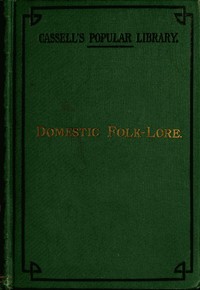
Domestic folk-lore
Written by T. F. (Thomas Firminger) Thiselton-Dyer
Chaptra reads alongside you — AI insights, chapter breakdowns and reader discussions for every book. Join free
About this book
Reading guide
Themes, characters and key ideas in Domestic folk-lore, written by Chaptra AI.
- about 8 hours
- intermediate
- informative
- historical
- scholarly
T. F. Thiselton-Dyer's "Domestic Folk-lore" is a comprehensive late 19th-century anthropological study that meticulously documents the customs, beliefs, and superstitions prevalent in everyday domestic life. The work systematically explores various stages of human existence, from birth and childhood to love, marriage, and death, capturing the rich tapestry of folk traditions passed down through generations. It serves as both a scholarly resource, offering invaluable insights into the social and cultural history of previous eras, and a cultural artifact reflecting humanity's enduring desire for protection and prosperity. The book’s initial chapters, for instance, delve into birth-related omens and rituals, highlighting the profound significance of these beliefs despite their perceived outdatedness. Ultimately, it provides a window into the historical power of folklore in shaping daily lives and understanding societal values.
“The subtle influence of tradition, often dismissed as mere superstition, profoundly shapes the daily lives and aspirations of a people, particularly within the domestic sphere.”
Key themes
- Preservation of Folk Traditions
- The book's overarching purpose is to meticulously document and preserve the vast array of customs, beliefs, and superstitions that constitute domestic folklore, preventing their loss in the face of modernization. It highlights the importance of collecting these cultural artifacts for future generations, serving as a vital historical record.
- The Role of Superstition in Daily Life
- Thiselton-Dyer explores how seemingly irrational beliefs permeated every aspect of domestic life, from significant life events to mundane daily tasks. These superstitions often served practical, psychological, or social functions within communities, acting as integral components of a worldview that sought to explain and influence the unknown.
- Human Desire for Protection and Prosperity
- Underlying many of the documented folk beliefs is a fundamental human longing for security, well-being, and favorable outcomes. This is particularly evident concerning the vulnerable stages of life such as birth, illness, and the uncertainties of love and marriage. These traditions often served as perceived safeguards against misfortune, illness, or death.
Worth discussing
How do the folk beliefs documented in the book compare to contemporary superstitions or cultural practices?
Chapter-by-chapter breakdowns, character arcs and the full thematic analysis come with a free account.
Discussions
No one has started one yet
Questions this book opens up
No discussions yet
Be the first to start a discussion about this book!
Sign up to start the discussionReviews
No reviews yet
Be the first to review this book!