
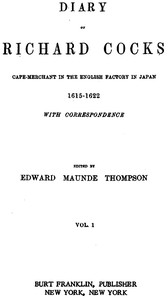
Diary of Richard Cocks, Volume 1: Cape-Merchant in the English Factory in Japan, 1615-1622, with Correspondence
Written by Richard Cocks
Chaptra reads alongside you — AI insights, chapter breakdowns and reader discussions for every book. Join free
About this book
Reading guide
Themes, characters and key ideas in Diary of Richard Cocks, Volume 1: Cape-Merchant in the English Factory in Japan, 1615-1622, with Correspondence, written by Chaptra AI.
- about 25 hours
- advanced
- historical
- struggle
- observational
Richard Cocks's 'Diary of Richard Cocks, Volume 1' offers a vital first-hand account of the English East India Company's ill-fated trading factory in Japan between 1615 and 1622. As the cape-merchant, Cocks chronicles the daily operations, political maneuvering, and severe economic challenges faced by the English amidst fierce competition from Dutch rivals and the complex socio-political landscape of early 17th-century Japan. The diary meticulously details the English attempts to establish trade relations, their interactions with local officials, and the gradual unraveling of their commercial aspirations. It serves as a poignant testament to the trials of cross-cultural exchange and the harsh realities of early globalization, ultimately documenting a significant yet unsuccessful chapter in Anglo-Japanese relations.
“This day we had much trouble with the Hollanders, who seek by all means to hinder our trade.”
Key themes
- Cross-Cultural Interaction and Misunderstanding
- This theme explores the profound challenges and complexities of communication, negotiation, and daily coexistence between the English traders and Japanese society. It highlights the vast differences in customs, legal systems, religious beliefs, and social norms, often leading to frustration, misinterpretations, and diplomatic impasses.
- Economic Imperialism and Failure
- This theme examines the aspirations and ultimate failure of the English East India Company's attempt to establish a profitable trading presence in Japan. It delves into the economic realities of early modern global trade, the high costs, fierce competition, and the eventual realization that the venture was unsustainable despite initial ambitions.
- Rivalry and Competition
- The intense and often hostile competition between the English and Dutch East India Companies forms a core element of the diary. This theme explores how commercial rivalry extended beyond mere pricing, encompassing political maneuvering, propaganda, and even military clashes, reflecting the cutthroat nature of early modern global trade.
Worth discussing
How does Cocks's diary illuminate the challenges of cross-cultural communication and negotiation in the early 17th century?
Chapter-by-chapter breakdowns, character arcs and the full thematic analysis come with a free account.
Discussions
No one has started one yet
Questions this book opens up
No discussions yet
Be the first to start a discussion about this book!
Sign up to start the discussionReviews
No reviews yet
Be the first to review this book!