
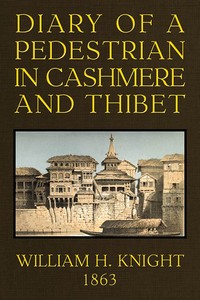
Diary of a Pedestrian in Cashmere and Thibet
Written by W. H. (William Henry) Knight
Chaptra reads alongside you — AI insights, chapter breakdowns and reader discussions for every book. Join free
About this book
Reading guide
Themes, characters and key ideas in Diary of a Pedestrian in Cashmere and Thibet, written by Chaptra AI.
- about 10 hours
- intermediate
- adventurous
- descriptive
- historical
W. H. Knight's "Diary of a Pedestrian in Cashmere and Thibet" is a captivating mid-19th century travel narrative detailing the author's ambitious expedition through the challenging mountainous terrains of Cashmere and Tibet. Driven by a desire to escape the Indian heat, Knight embarks on a journey filled with both breathtaking natural beauty and formidable logistical hurdles. The book serves as a personal chronicle, offering vivid descriptions of landscapes, cultures encountered, and the unique challenges of travel in an era devoid of modern conveniences. Through engaging anecdotes and a keen eye for detail, Knight provides a valuable historical document of a region largely unexplored by Westerners, underpinned by a spirit of adventure and observation.
“The oppressive heat of the plains was a tyrant, and the cool heights of Cashmere beckoned with the promise of respite.”
Key themes
- Exploration and Discovery
- The central theme of the book, focusing on the human drive to venture into unknown territories, uncover new knowledge, and experience the world beyond one's familiar confines. It highlights the courage, resilience, and curiosity required for such endeavors in the 19th century.
- Man vs. Nature
- This theme explores the formidable power and majesty of the natural world, particularly the challenging Himalayan environment, and the human struggle to navigate, adapt to, and survive within it. It showcases both the beauty and the indifference of nature.
- Cultural Encounter and Observation
- The book serves as a record of Knight's interactions with and observations of the diverse cultures inhabiting Cashmere and Tibet. It highlights the differences in customs, beliefs, and daily lives, providing a snapshot of these societies from a 19th-century Western perspective.
Worth discussing
How does Knight's perspective as a 19th-century Westerner influence his descriptions of local cultures and landscapes?
Chapter-by-chapter breakdowns, character arcs and the full thematic analysis come with a free account.
Discussions
No one has started one yet
Questions this book opens up
No discussions yet
Be the first to start a discussion about this book!
Sign up to start the discussionReviews
No reviews yet
Be the first to review this book!