
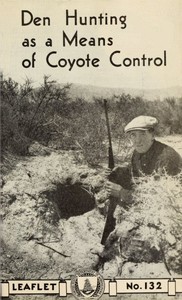
Den Hunting as a Means of Coyote Control
Written by Stanley Paul Young,Harold Warren Dobyns
Chaptra reads alongside you — AI insights, chapter breakdowns and reader discussions for every book. Join free
About this book
Reading guide
Themes, characters and key ideas in Den Hunting as a Means of Coyote Control, written by Chaptra AI.
- about 5 hours
- intermediate
- informative
- practical
- systematic
''Den Hunting as a Means of Coyote Control'' by Young and Dobyns is a foundational scientific publication from the late 1930s, meticulously detailing strategies for managing coyote populations, primarily through den hunting. The work systematically outlines the lifecycle and habits of coyotes, particularly focusing on their whelping season, to identify optimal times and methods for intervention. It provides practical instructions for locating dens, understanding coyote behavior, and safely removing young whelps, emphasizing the importance of timing and systematic observation. Beyond the practical guide, the book also touches upon the broader ecological context of coyote presence and control, reflecting early 20th-century perspectives on human-wildlife conflict and resource management. Ultimately, it serves as a historical document showcasing the then-prevailing scientific and utilitarian approach to predator control aimed at protecting livestock.
“"The effective control of coyotes necessitates a thorough understanding of their breeding habits and denning practices."”
Key themes
- Human-Wildlife Conflict
- The core theme of the book, exploring the tension between human agricultural pursuits (livestock protection) and the natural predatory behavior of coyotes. It frames this conflict from a purely human-centric perspective, advocating for active intervention to mitigate the economic impact of wildlife on human interests.
- Control and Management of Nature
- This theme reflects an early 20th-century mindset of human dominance over nature, viewing wildlife as a resource to be managed or a problem to be solved through direct intervention. The book provides a detailed blueprint for exercising control over a specific wild population, based on scientific understanding of its biology.
- Scientific Observation and Methodology
- Despite its controversial subject matter, the book is a testament to the application of systematic scientific observation to a practical problem. It emphasizes careful study of animal behavior, environmental signs, and biological cycles as the foundation for effective intervention, showcasing a methodical approach to understanding and manipulating natural systems.
Worth discussing
How have attitudes towards predator control and wildlife management evolved since the publication of this book?
Chapter-by-chapter breakdowns, character arcs and the full thematic analysis come with a free account.
Discussions
No one has started one yet
Questions this book opens up
No discussions yet
Be the first to start a discussion about this book!
Sign up to start the discussionReviews
No reviews yet
Be the first to review this book!