
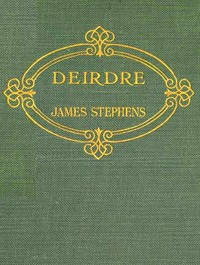
Deirdre
Written by James Stephens
Chaptra reads alongside you — AI insights, chapter breakdowns and reader discussions for every book. Join free
About this book
Reading guide
Themes, characters and key ideas in Deirdre, written by Chaptra AI.
- about 8 hours
- intermediate
- tragic
- romantic
- mythical
James Stephens' "Deirdre" is a lyrical retelling of a foundational Irish myth, tracing the tragic life of Deirdre of the Sorrows. Born under a prophecy of doom, her extraordinary beauty is destined to bring ruin to Ulster. The story follows King Conachúr's possessive desire for her, her fated love for the warrior Naoise, and their subsequent flight and eventual betrayal. Stephens masterfully weaves themes of fate, jealousy, loyalty, and the destructive power of love, culminating in a poignant exploration of sorrow and loss within a richly mythical landscape. It stands as a testament to the enduring power of ancient tales reinterpreted through a distinctively modern, poetic sensibility.
“"For Conachúr was a man full of pride and jealousy, and he held that the love of a woman should be for him alone, and that no other man should have the joy of her presence."”
Key themes
- Fate vs. Free Will
- The central philosophical conflict, explored through Deirdre's birth prophecy and the subsequent choices made by characters. Despite attempts to defy or control fate, the narrative consistently demonstrates that destiny, particularly sorrow, is inescapable, questioning the extent of human agency.
- Sorrow and Loss
- The overarching emotional landscape of the novel, explicitly named in Deirdre's epithet, 'Deirdre of the Sorrows.' The narrative is a journey through profound grief, lamentation, and the crushing weight of irreparable loss, culminating in Deirdre's ultimate despair and the ruin of all involved.
- Destructive Love and Jealousy
- The narrative powerfully illustrates how both obsessive love and consuming jealousy can lead to ruin. Conachúr's jealousy of Naoise's love for Deirdre fuels his treacherous actions, while Deirdre and Naoise's pure, intense love, though beautiful, is the catalyst for widespread destruction and personal tragedy.
Worth discussing
How does Stephens' portrayal of fate influence the characters' choices? Do they have any free will?
Chapter-by-chapter breakdowns, character arcs and the full thematic analysis come with a free account.
Discussions
No one has started one yet
Questions this book opens up
No discussions yet
Be the first to start a discussion about this book!
Sign up to start the discussionReviews
No reviews yet
Be the first to review this book!