
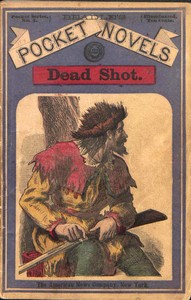
Dead Shot; Or, The White Vulture: A Romance of the Yellowstone
Written by Albert W. Aiken
Chaptra reads alongside you — AI insights, chapter breakdowns and reader discussions for every book. Join free
About this book
Reading guide
Themes, characters and key ideas in Dead Shot; Or, The White Vulture: A Romance of the Yellowstone, written by Chaptra AI.
- about 8 hours
- intermediate
- tense
- adventurous
- mysterious
Set in the untamed Yellowstone region of the late 19th century, Albert W. Aiken's 'Dead Shot; Or, The White Vulture' plunges readers into a world of intense frontier conflict and romantic intrigue. The narrative centers on Abe Colt, the vengeful 'Crow-Killer,' and Dave Reed, a young guide entangled in a mystery surrounding a doppelgänger. As tensions escalate at Fort Bent amidst the looming threat of attacks from the Crow tribe led by the formidable 'White Vulture,' the story weaves together threads of revenge, survival, and burgeoning love. The novel vividly portrays the harsh realities of settler-Native American interactions, promising a suspenseful journey through a dangerous landscape where personal histories collide with tribal warfare.
“"In the heart of the Yellowstone, every shadow held a secret, and every whisper carried the weight of a coming storm."”
Key themes
- Revenge and Justice on the Frontier
- This theme is central to Abe Colt's character, the 'Crow-Killer,' whose actions are driven by a personal vendetta against the Crow tribe. It explores how justice is conceived and enacted in a lawless frontier environment, often through violent retribution, and questions the morality and consequences of such personal justice. It highlights the cycle of violence inherent in settler-Native American conflicts.
- Clash of Cultures and Frontier Conflict
- The novel vividly portrays the tense interactions between settlers and Native Americans in the Yellowstone region. It delves into the conflicts arising from territorial disputes, differing worldviews, and mutual suspicion. The narrative, while likely biased from a settler perspective, illustrates the harsh realities and violence that characterized westward expansion, personified by the Crow tribe led by the 'White Vulture' and the settlers defending Fort Bent.
- Survival and Resilience in the Wilderness
- The Yellowstone region itself acts as a formidable character, challenging the limits of human endurance. This theme explores the physical and mental resilience required to survive in an untamed environment, where danger is constant and resources are scarce. It highlights the skills, adaptability, and sheer will necessary for both settlers and Native Americans to exist in such a demanding landscape.
Worth discussing
How does Aiken's portrayal of the Yellowstone frontier reflect or distort the historical realities of the late 19th century?
Chapter-by-chapter breakdowns, character arcs and the full thematic analysis come with a free account.
Discussions
No one has started one yet
Questions this book opens up
No discussions yet
Be the first to start a discussion about this book!
Sign up to start the discussionReviews
No reviews yet
Be the first to review this book!