
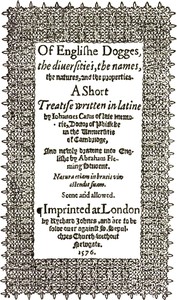
De Canibus Britannicis: Of Englishe Dogges
Written by John Caius
Chaptra reads alongside you — AI insights, chapter breakdowns and reader discussions for every book. Join free
About this book
Reading guide
Themes, characters and key ideas in De Canibus Britannicis: Of Englishe Dogges, written by Chaptra AI.
- about 8 hours
- advanced
- informative
- systematic
- scholarly
John Caius's "De Canibus Britannicis: Of Englishe Dogges" is a seminal late 16th-century scientific treatise dedicated to the systematic classification and description of dog breeds native to England. Presented as an epistle to fellow scholar Conrad Gesner, the work meticulously details canine characteristics, functions, and distinctions within hunting and domestic spheres. Caius establishes a tripartite classification system—noble, rustic, and degenerate breeds—and provides exhaustive anatomical and behavioral insights for each, such as the Sagax (Hound) and Harrier. This foundational text not only showcases early zoological methodology but also offers invaluable socio-historical insights into human-animal relationships and the utility of dogs in Elizabethan England.
“It is my earnest intent, O most learned Gesner, to set forth a diligent account of those Dogs which are native to our Britannic Isle, a task both necessary and long neglected.”
Key themes
- Scientific Classification and Empiricism
- The foundational theme of the treatise, exploring the systematic ordering of natural phenomena through observation and categorization. Caius meticulously classifies dogs into distinct breeds and categories based on observable traits, functions, and perceived lineage, reflecting an early modern scientific approach to understanding the natural world.
- Human-Animal Relationship and Utility
- This theme examines the multifaceted relationship between humans and dogs, primarily through the lens of utility. Caius consistently emphasizes the practical functions of different breeds, whether for hunting, herding, guarding, or companionship, illustrating how dogs were integrated into human society and economy in the 16th century.
- National Identity and Distinctiveness
- By focusing specifically on 'Englishe Dogges' and 'Britannicis,' Caius subtly asserts a sense of national pride and distinctiveness. The treatise contributes to a burgeoning sense of English identity by cataloging and celebrating a unique aspect of its natural heritage, much like other works of the era focused on national flora, fauna, or history.
Worth discussing
How does Caius's classification system reflect the scientific understanding of the 16th century, and how does it compare to modern taxonomy?
Chapter-by-chapter breakdowns, character arcs and the full thematic analysis come with a free account.
Discussions
No one has started one yet
Questions this book opens up
No discussions yet
Be the first to start a discussion about this book!
Sign up to start the discussionReviews
No reviews yet
Be the first to review this book!