
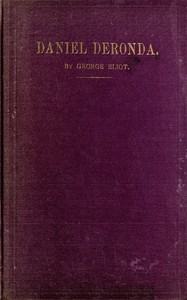
Daniel Deronda
Written by George Eliot
Chaptra reads alongside you — AI insights, chapter breakdowns and reader discussions for every book. Join free
About this book
Reading guide
Themes, characters and key ideas in Daniel Deronda, written by Chaptra AI.
- about 25 hours
- advanced
- serious
- philosophical
- melancholy
George Eliot's "Daniel Deronda" is a profound Victorian novel that intertwines two distinct narratives: the tragic moral decline of the beautiful, ambitious Gwendolen Harleth, trapped in a disastrous marriage, and the spiritual quest of the eponymous Daniel Deronda, an enigmatic young man searching for his true identity and purpose. The novel explores the suffocating constraints placed upon women in 19th-century England and contrasts this with the burgeoning Zionist ideals and rich cultural heritage of the Jewish community. Through these parallel stories, Eliot delves into themes of moral choice, social responsibility, the search for belonging, and the redemptive power of empathy and spiritual awakening.
“"The beginning of compunction is the beginning of wisdom."”
Key themes
- Identity and Belonging
- This is central to Daniel Deronda's journey, as he grapples with the mystery of his origins and eventually embraces his Jewish heritage. The theme explores how identity is shaped by ancestry, culture, and personal choice, and the profound human need for a sense of belonging, both individually and nationally.
- Moral Responsibility and Conscience
- Eliot meticulously explores the development of moral conscience, particularly through Gwendolen Harleth's painful journey. The novel examines how individuals confront their own ethical failings, the consequences of their choices, and the potential for redemption through suffering, self-awareness, and compassionate guidance.
- Social Constraints and Female Agency
- The novel offers a scathing critique of the limited opportunities available to women in Victorian society, particularly those without independent means. It highlights how social expectations and economic pressures can force women into compromising situations, often leading to tragic outcomes, and explores the struggle for personal freedom and self-determination within these confines.
Worth discussing
Discuss the novel's bifurcated structure. Do the 'English' and 'Jewish' plots successfully complement each other, or does one detract from the other? Which did you find more compelling?
Chapter-by-chapter breakdowns, character arcs and the full thematic analysis come with a free account.
Discussions
No one has started one yet
Questions this book opens up
No discussions yet
Be the first to start a discussion about this book!
Sign up to start the discussionReviews
No reviews yet
Be the first to review this book!