
The AI reading companion for people who take books seriously
AI insights, chapter breakdowns, community discussions — all in one place.
Dandy Dick: A Play in Three Acts
About this book
More by Arthur Wing Pinero
Browse all books by this authorExplore English drama Books
Discover more English drama literature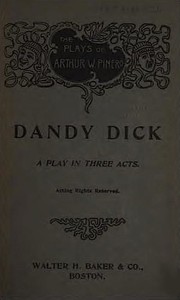
Click "Read now" to open in our Reader with AI features.
Community Discussions
Join the conversation about this book
Discussions
0 discussions
No discussions yet
Be the first to start a discussion about this book!
Sign up to start the discussionAI-Powered Insights
A clearer way to understand Dandy Dick: A Play in Three Acts through themes, characters, and key ideas
This reading guide highlights what stands out in Dandy Dick: A Play in Three Acts through 4 core themes, 5 character profiles. It is meant to help readers decide whether the book fits their taste and deepen the reading once they begin.
About this book
A quick AI guide to “Dandy Dick: A Play in Three Acts”
Get the shape of the book before you commit: what it is about, what mood it carries, and what ideas readers tend to stay with afterward.
What the book is doing
Arthur Wing Pinero's "Dandy Dick: A Play in Three Acts" is a spirited late 19th-century comedy that deftly satirizes Victorian social propriety and the generational clash between tradition and modernity. Set against the backdrop of the Deanery of St. Marvells, the play follows the spirited daughters, Salome and Sheba, as they navigate their desire to attend a forbidden masked ball, setting off a chain of uproarious events. Their youthful rebellion and quest for funds for their elaborate costumes intertwine with their father, the Dean's, worldly concerns and the arrival of complicating characters like Major Tarver and Mr. Darbey. Through witty dialogue and farcical situations, Pinero explores themes of duty, love, and the humorous challenges of maintaining decorum in a rapidly changing society, culminating in delightful chaos and social commentary.
Key Themes
Social Propriety vs. Individual Desire
This theme is central to the play, as the Dean's daughters, Salome and Sheba, express a strong desire to attend a masked ball, an activity deemed improper and frivolous by their father and Victorian society. Their yearning for personal enjoyment and self-expression clashes directly with the rigid expectations of decorum and respectability, particularly for young women. The comedic situations arise from their attempts to navigate or defy these social rules.
Tradition vs. Modernity
The play vividly portrays the generational conflict between older, established traditions and newer, more liberal ideas emerging in the late 19th century. The Dean embodies the traditional values of duty, decorum, and religious piety, while his daughters, Salome and Sheba, represent a burgeoning modernity, characterized by a desire for entertainment, personal agency, and a less rigid social life. The humor often stems from the Dean's struggle to comprehend or control the changing world around him.
“"Oh, father, surely a little gaiety isn't a sin, especially when one is young and life calls!"”
How does Pinero use humor and farce to critique Victorian social conventions and expectations?
See chapter-by-chapter takeaways, deeper character arcs, and a fuller literary analysis built around this book.
Unlock full AI analysis for “Dandy Dick: A Play in Three Acts”
Chapter breakdowns, character deep-dives, and thematic analysis — all in one place.
Reader Reviews
See what others are saying
Reviews
Overall Rating
Based on community ratings
No reviews yet
Be the first to review this book!
Readers Also Enjoyed
Discover more books similar to Dandy Dick: A Play in Three Acts