
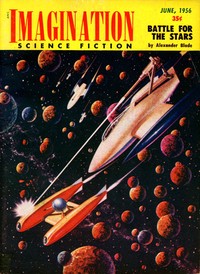
Dalrymple's Equation
Written by Paul W. Fairman
Chaptra reads alongside you — AI insights, chapter breakdowns and reader discussions for every book. Join free
About this book
Reading guide
Themes, characters and key ideas in Dalrymple's Equation, written by Chaptra AI.
- about 7 hours
- intermediate
- paranoid
- philosophical
- tense
Paul W. Fairman's "Dalrymple's Equation" plunges into the terrifying implications of perfect foresight when Dr. John Dalrymple discovers an equation allowing him to accurately predict future events. This groundbreaking scientific achievement quickly devolves into a personal and global nightmare as Dalrymple witnesses a catastrophic future for humanity, possibly orchestrated by an alien intelligence or brought about by internal conflict. Plagued by paranoia and the immense burden of his knowledge, he embarks on a desperate, solitary quest to avert the predicted disaster, questioning the very nature of free will and the ethics of scientific discovery. The novel explores the psychological toll of omniscience and the struggle against a seemingly predetermined fate, blending speculative science with a tense, psychological thriller narrative.
“The future was not a hazy landscape, but a perfectly rendered blueprint, and the horror was that it was unchangeable.”
Key themes
- Determinism vs. Free Will
- The central philosophical conflict of the novel, exploring whether humanity truly has agency or if all events are predetermined. Dalrymple's equation explicitly suggests that the future is fixed, forcing him and the reader to confront the implications of a universe without genuine choice.
- The Burden of Knowledge
- This theme explores the destructive power of omniscience and the psychological toll it takes. Dalrymple's discovery, initially a triumph, becomes a curse, isolating him and driving him to paranoia as he alone bears the weight of humanity's grim future.
- Scientific Ethics and Responsibility
- The novel implicitly questions the moral boundaries of scientific pursuit, particularly when discoveries unlock powers with profound, potentially destructive, societal implications. It asks whether some knowledge is too dangerous to possess or pursue.
Worth discussing
How does Dalrymple's Equation explore the conflict between free will and determinism? Do you believe Dalrymple truly had a choice?
Chapter-by-chapter breakdowns, character arcs and the full thematic analysis come with a free account.
Discussions
No one has started one yet
Questions this book opens up
No discussions yet
Be the first to start a discussion about this book!
Sign up to start the discussionReviews
No reviews yet
Be the first to review this book!