
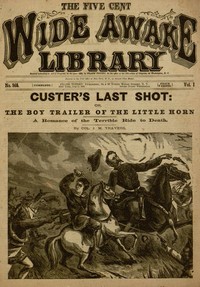
Custer's Last Shot; or, The Boy Trailer of the Little Horn
Written by J. M. Travers
Chaptra reads alongside you — AI insights, chapter breakdowns and reader discussions for every book. Join free
About this book
Reading guide
Themes, characters and key ideas in Custer's Last Shot; or, The Boy Trailer of the Little Horn, written by Chaptra AI.
- about 8 hours
- intermediate
- adventurous
- suspenseful
- tragic
Col. J. M. Travers's "Custer's Last Shot; or, The Boy Trailer of the Little Horn" is a late 19th-century historical romance set against the backdrop of the fateful Battle of the Little Bighorn. The narrative intricately weaves together the perilous quest of seasoned ranger Pandy Ellis to rescue his captured friend, Bolly Wherrit, with the broader military context of General George Custer's impending engagement with a formidable Sioux force. As Ellis confronts an adversarial Indian chief, Yellow Hawk, and a young boy named Mason embarks on a dangerous mission, the story explores profound themes of bravery, unwavering loyalty, and the specter of betrayal. Infused with tension and anticipation, the book immerses its characters in one of America's most tragic military confrontations, promising a gripping saga of survival and conflict on the treacherous frontier.
“"The Little Bighorn calls, Pandy. And by heaven, I'll answer, or die trying to reach Custer's side."”
Key themes
- Bravery and Heroism
- This theme is central, explored through the courageous actions of Pandy Ellis in his relentless pursuit, Bolly Wherrit's defiance in captivity, Mason's dangerous mission, and Custer's ultimate stand. It highlights the individual's capacity for valor in the face of overwhelming danger and the idealized perception of military and frontier courage.
- Loyalty and Friendship
- The deep bond between Pandy Ellis and Bolly Wherrit forms the emotional core of the narrative, driving Ellis's dangerous quest. This theme underscores the power of personal allegiance and camaraderie in extreme circumstances, contrasting with the broader, often impersonal, nature of military conflict.
- Frontier Conflict and Manifest Destiny
- The entire narrative is set within the violent context of the American frontier expansion, specifically the conflict between U.S. forces and Native American tribes. The book, typical of its era, likely presents this conflict through the lens of Manifest Destiny, portraying the 'clash of civilizations' and the struggle for land and power.
Worth discussing
How does the novel balance personal quests with the larger historical narrative of the Battle of Little Bighorn?
Chapter-by-chapter breakdowns, character arcs and the full thematic analysis come with a free account.
Discussions
No one has started one yet
Questions this book opens up
No discussions yet
Be the first to start a discussion about this book!
Sign up to start the discussionReviews
No reviews yet
Be the first to review this book!