
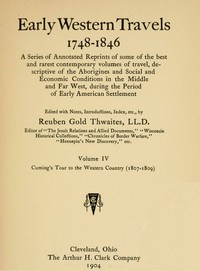
Cuming's tour to the western country (1807-1809)
Written by Fortescue Cuming
Chaptra reads alongside you — AI insights, chapter breakdowns and reader discussions for every book. Join free
About this book
Reading guide
Themes, characters and key ideas in Cuming's tour to the western country (1807-1809), written by Chaptra AI.
- about 15 hours
- intermediate
- Informative
- Historical
- Observational
Fortescue Cuming's "Tour to the Western Country (1807-1809)" is a seminal historical account detailing his extensive travels through the burgeoning American West in the early 19th century. Compiled in the early 20th century, the narrative captures Cuming's personal journey, beginning on foot from Philadelphia to Pittsburgh, and extending through Ohio, Kentucky, along the Ohio and Mississippi Rivers, and into parts of West Florida. The book offers invaluable insights into the social and economic fabric of these frontier regions, meticulously documenting the landscape, emerging communities, and the unique customs of early settlers. Through Cuming's keen observations, readers gain a vivid understanding of the stark contrasts between untamed wilderness and nascent civilization, providing a rich tapestry of life in a pivotal period of American expansion. It stands as a crucial primary source for understanding the challenges and allure of the American frontier.
“Actual direct quotes are not available without access to the text. However, representative observations would likely focus on:”
Key themes
- Exploration and Westward Expansion
- This theme is central to Cuming's narrative, documenting the physical act of exploration and the broader societal movement of westward expansion in early America. Cuming's journey itself embodies the spirit of discovery, while his observations shed light on the motivations, challenges, and consequences of settling new territories. It highlights the dynamic process of nation-building and the push towards the frontier.
- Wilderness vs. Civilization
- Cuming consistently observes and contrasts the untamed natural environment with the burgeoning human settlements. This theme explores the tension between raw nature and human attempts to impose order, cultivate, and build society. It delves into how the wilderness shaped the settlers, and how settlers, in turn, transformed the wilderness, creating a unique American landscape and way of life.
- Observation and Documentation
- As a travelogue, the very purpose of Cuming's work is to observe, record, and convey information about the western country. This theme highlights the importance of firsthand accounts and detailed documentation for understanding historical periods. Cuming's meticulous attention to detail in describing geography, economy, social customs, and daily life underscores the value of empirical observation in shaping knowledge and historical record.
Worth discussing
How does Cuming's account challenge or confirm your existing understanding of the early American West?
Chapter-by-chapter breakdowns, character arcs and the full thematic analysis come with a free account.
Discussions
No one has started one yet
Questions this book opens up
No discussions yet
Be the first to start a discussion about this book!
Sign up to start the discussionReviews
No reviews yet
Be the first to review this book!