
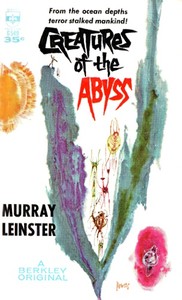
Creatures of the Abyss
Written by Murray Leinster
Chaptra reads alongside you — AI insights, chapter breakdowns and reader discussions for every book. Join free
About this book
Reading guide
Themes, characters and key ideas in Creatures of the Abyss, written by Chaptra AI.
- about 8 hours
- intermediate
- mysterious
- adventurous
- tense
In Murray Leinster's 1960s science fiction novel, "Creatures of the Abyss," electronics expert Terry Holt finds his company's Manila operations disrupted by the inexplicable success of a fishing boat, 'La Rubia,' which is catching an unprecedented number of fish, causing turmoil among local fishermen. He partners with Deirdre, who seeks his expertise to design a specialized fish-driving device for her father's struggling boat, leading them into a deep-sea mystery. Their collaboration uncovers strange underwater sounds and supernatural phenomena, blending technological adventure with ancient maritime superstitions. As they delve deeper into the ocean's enigmatic depths, they confront the unknown forces behind the unusual marine activity, revealing a thrilling blend of scientific inquiry and speculative wonder.
“The abyss holds secrets no sonar can fully map, nor any net truly capture.”
Key themes
- Science vs. Superstition
- The novel explores the clash between empirical, scientific understanding and traditional, often superstitious, beliefs. Terry Holt embodies the scientific approach, seeking rational explanations for phenomena, while the local fishermen, including Deirdre initially, attribute unusual events to 'underwater entities' or supernatural forces. The narrative likely navigates this tension, potentially showing how science can explain what once seemed mystical, or how certain mysteries defy easy categorization.
- The Unexplored Abyss and Deep-Sea Exploration
- A core theme is humanity's fascination with and ventures into the unexplored depths of the ocean. The 'abyss' represents the ultimate frontier on Earth, a place of immense pressure, darkness, and potential for unknown life forms. The novel capitalizes on the mystery and wonder associated with deep-sea environments, positing that extraordinary creatures or phenomena could exist just beyond our current understanding.
- Technology and Its Impact
- The novel critically examines the role of technology, both as a tool for understanding and as a disruptive force. Terry Holt's expertise is in electronics, and his 'fish-driving device' is a central plot element. However, the initial problem itself stems from 'La Rubia's' (presumably technologically enhanced) fishing success, highlighting how new technologies can upset existing social and economic structures, as well as potentially interact with natural systems in unforeseen ways.
Worth discussing
How does the novel explore the tension between scientific explanation and superstitious belief? Which perspective ultimately holds more sway?
Chapter-by-chapter breakdowns, character arcs and the full thematic analysis come with a free account.
Discussions
No one has started one yet
Questions this book opens up
No discussions yet
Be the first to start a discussion about this book!
Sign up to start the discussionReviews
No reviews yet
Be the first to review this book!