
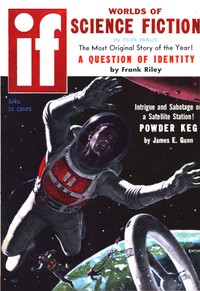
Conservation
Written by Charles L. Fontenay
Chaptra reads alongside you — AI insights, chapter breakdowns and reader discussions for every book. Join free
About this book
Reading guide
Themes, characters and key ideas in Conservation, written by Chaptra AI.
- about 3 hours
- intermediate
- mysterious
- thought-provoking
- cautionary
Charles L. Fontenay's "Conservation" is a mid-20th century science fiction novella set on a post-apocalyptic Earth, where humanity has regressed technologically despite possessing advanced capabilities, driven by stringent conservation measures following catastrophic warfare. The narrative centers on Executive Officer John Gray and his crew, returning after a 258-year colonization mission, who discover a military society living primitively amidst sophisticated machinery. They must navigate Earth's peculiar customs and legal system, gradually uncovering the society's true motivations: a long and brutal struggle against alien invaders. Ultimately, the crew's advanced knowledge from their interstellar journey offers a potential catalyst for Earth's technological rebirth and a more sustainable future.
“"For two and a half centuries, we've built a new world. To return and find our old one lost... it's a desolation beyond any void."”
Key themes
- Technological Regression vs. Progress
- This central theme explores the deliberate abandonment of advanced technology by Earth's society as a self-preservation mechanism following catastrophic warfare and alien invasion. It contrasts sharply with the progressive, technologically adept society represented by John Gray's crew, raising questions about the true cost of security versus advancement and the nature of human evolution.
- Survival and Adaptation
- The novella deeply examines humanity's drive to survive in the face of existential threats. Earth's society adapted by radically changing its lifestyle and abandoning technology, while Gray's crew adapted by building a new civilization on a distant planet. The narrative questions which form of adaptation is more sustainable or ultimately beneficial for the species.
- Fear and Trauma
- The deep-seated fear and collective trauma from the catastrophic warfare and alien invasion are central to understanding Earth's current state. This theme explores how past suffering can lead to extreme societal measures, suspicion of the unknown, and a reluctance to embrace change, even if that change could lead to improvement.
Worth discussing
How does Earth's society in "Conservation" define 'conservation,' and how does this differ from John Gray's crew's understanding?
Chapter-by-chapter breakdowns, character arcs and the full thematic analysis come with a free account.
Discussions
No one has started one yet
Questions this book opens up
No discussions yet
Be the first to start a discussion about this book!
Sign up to start the discussionReviews
No reviews yet
Be the first to review this book!