
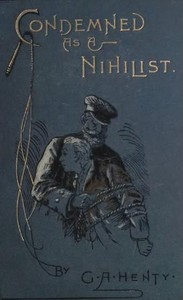
Condemned as a Nihilist: A Story of Escape from Siberia
Written by G. A. (George Alfred) Henty
Chaptra reads alongside you — AI insights, chapter breakdowns and reader discussions for every book. Join free
About this book
Reading guide
Themes, characters and key ideas in Condemned as a Nihilist: A Story of Escape from Siberia, written by Chaptra AI.
- about 8 hours
- intermediate
- suspenseful
- perilous
- adventurous
G. A. Henty's "Condemned as a Nihilist" plunges young Godfrey Bullen, an Englishman new to St. Petersburg, into the perilous world of late 19th-century Russian political intrigue. Unknowingly entangled with the revolutionary Nihilists after attending a masked ball, Godfrey is dramatically arrested by the secret police, setting the stage for an unjust condemnation. His ensuing struggle involves enduring the harsh realities of Siberian exile, where he must rely on his courage and ingenuity to survive. The narrative culminates in a daring and arduous escape, chronicling his journey back to freedom and vindication against the backdrop of a tumultuous socio-political landscape.
“"In Russia, my lad, a man may be condemned for a look, and vanish from the world without a trace."”
Key themes
- Justice vs. Injustice
- This theme is central to the narrative, as Godfrey Bullen is unjustly condemned and exiled to Siberia despite his innocence. The arbitrary nature of the Russian legal system and the abuses of power by the Tsarist regime are highlighted, contrasting sharply with Godfrey's English sense of fair play and due process. His entire journey is a quest for vindication and the restoration of justice.
- Courage and Perseverance
- Godfrey's journey is a testament to the power of courage and unwavering perseverance. From enduring the harsh conditions of imprisonment and exile to planning and executing a perilous escape, he consistently demonstrates mental fortitude and physical resilience. This theme is presented as essential for survival and for overcoming seemingly insurmountable obstacles.
- Political Ideologies and Revolution
- The novel explores the volatile political landscape of late 19th-century Russia, focusing on the Nihilist movement and the autocratic Tsarist rule. While Henty's portrayal of Nihilism is often critical and seen from a British perspective as a dangerous, destructive force, the narrative also implicitly critiques the repressive regime that fuels such revolutionary sentiments. It highlights the dangers of extremism on both sides.
Worth discussing
How does Henty portray the Russian Nihilists and the Tsarist regime? Is this portrayal balanced or biased?
Chapter-by-chapter breakdowns, character arcs and the full thematic analysis come with a free account.
Discussions
No one has started one yet
Questions this book opens up
No discussions yet
Be the first to start a discussion about this book!
Sign up to start the discussionReviews
No reviews yet
Be the first to review this book!