
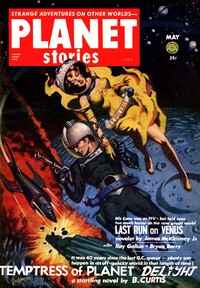
Con-Fen
Written by James R. Adams
Chaptra reads alongside you — AI insights, chapter breakdowns and reader discussions for every book. Join free
About this book
Reading guide
Themes, characters and key ideas in Con-Fen, written by Chaptra AI.
- about 3 hours
- intermediate
- humorous
- satirical
- whimsical
James R. Adams's 1950s novella, "Con-Fen," humorously chronicles the ill-fated Earth vacation of two Martian tourists, Koosh and Thuko. Drawn by Earth's abundant resources, they arrive in Chicago, initially enjoying invisibility to humans as long as disbelief in their existence persists. Their adventures escalate from joyous consumption in a supermarket to a chaotic encounter in a hotel, where their presence becomes undeniable to some. Ultimately, their escape attempt culminates in an accidental demise, leaving bewildered humans to speculate about the strange, fleeting beings they glimpsed. The story serves as a satirical commentary on human perception, belief, and the inherent absurdity of existence through an extraterrestrial lens.
“"Oh, the air! It sings with unseen flavors, a symphony for the lungs!"”
Key themes
- Belief and Perception
- The central theme revolves around the idea that reality is shaped by belief. The Martians' invisibility is directly tied to human disbelief, making their existence contingent on human perception. This highlights how our minds filter and construct what we consider 'real,' often dismissing phenomena that challenge our worldview.
- Satire of Human Existence
- Through the alien gaze of Koosh and Thuko, the novella humorously critiques various aspects of human society, including consumerism, our detachment from nature's abundance, and our often-absurd reactions to the unknown. The Martians' simple joy in Earth's basic elements contrasts sharply with human preoccupations.
- The Absurdity of Life and Death
- The novella culminates in the Martians' accidental and somewhat anticlimactic death, which underscores the arbitrary and often meaningless nature of existence and demise. Their grand adventure ends not with a heroic struggle, but a mundane collision, further highlighting the comedic and tragic absurdity of life.
Worth discussing
How does the novella use the concept of 'disbelief' to explore themes of perception and reality?
Chapter-by-chapter breakdowns, character arcs and the full thematic analysis come with a free account.
Discussions
No one has started one yet
Questions this book opens up
No discussions yet
Be the first to start a discussion about this book!
Sign up to start the discussionReviews
No reviews yet
Be the first to review this book!