
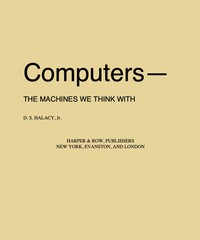
Computers—the machines we think with
Written by D. S. (Daniel Stephen) Halacy
Chaptra reads alongside you — AI insights, chapter breakdowns and reader discussions for every book. Join free
About this book
Reading guide
Themes, characters and key ideas in Computers—the machines we think with, written by Chaptra AI.
- about 8 hours
- intermediate
- informative
- futuristic
- analytical
D. S. Halacy, Jr.'s "Computers—the Machines We Think With," published in the early 1960s, serves as a pivotal exploration of the nascent field of computing. The book delves into the rapid advancements and transformative potential of electronic computers, showcasing their diverse applications across sectors such as banking, industry, military defense, and scientific research. Halacy elucidates the underlying technology and historical evolution of these machines, emphasizing their capacity to augment human intellect and automate complex tasks. Ultimately, the work posits computers as indispensable tools ushering in a new era of human capability and societal integration, marking them as central to the modern age.
“These machines, performing millions of operations in mere seconds, are not just tools; they are extensions of our very thought.”
Key themes
- Technological Progress and Innovation
- The book extensively details the rapid evolution of computers and their ever-expanding capabilities, celebrating human ingenuity in developing these complex machines. It highlights the constant drive for faster, more efficient, and more versatile computational power.
- Human-Machine Interaction and Augmentation
- Halacy explores the symbiotic relationship between humans and computers, portraying machines not as replacements for human intellect but as powerful extensions and enhancers of human capabilities. This theme delves into how computers can free humans from tedious tasks, allowing them to focus on higher-level thinking and creativity.
- Automation and Societal Change
- The book examines how computers are driving automation across various sectors, leading to significant shifts in industry, banking, and daily life. It implicitly addresses the societal implications of these changes, including potential impacts on employment, efficiency, and the structure of organizations.
Worth discussing
How accurate were Halacy's predictions about the future of computers and their societal impact?
Chapter-by-chapter breakdowns, character arcs and the full thematic analysis come with a free account.
Discussions
No one has started one yet
Questions this book opens up
No discussions yet
Be the first to start a discussion about this book!
Sign up to start the discussionReviews
No reviews yet
Be the first to review this book!