
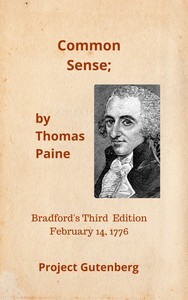
Common Sense
Written by Thomas Paine
Chaptra reads alongside you — AI insights, chapter breakdowns and reader discussions for every book. Join free
About this book
Reading guide
Themes, characters and key ideas in Common Sense, written by Chaptra AI.
- about 8 hours
- intermediate
- urgent
- revolutionary
- persuasive
Thomas Paine's "Common Sense" is a seminal political pamphlet from 1776 that powerfully argued for the immediate independence of the American colonies from Great Britain. It systematically dismantled the legitimacy of monarchy and hereditary succession, advocating instead for a republican government founded on democratic principles and the natural rights of individuals. Paine's accessible and urgent prose galvanized public opinion, transforming the colonial struggle from a dispute over grievances into a universal fight for liberty and self-governance. The work masterfully blends Enlightenment philosophy with practical reasoning, asserting America's capacity and moral imperative to forge a new, independent destiny as a beacon for mankind.
“Society in every state is a blessing, but Government, even in its best state, is but a necessary evil; in its worst state, an intolerable one.”
Key themes
- Natural Rights and Self-Governance
- Paine firmly roots his arguments in Enlightenment principles, asserting that all individuals possess inherent natural rights to life, liberty, and the pursuit of happiness. He argues that government's legitimacy derives solely from protecting these rights and that when a government fails to do so, or actively infringes upon them, the people have a right—indeed, a duty—to alter or abolish it. This theme underpins his entire call for independence and the establishment of a government based on popular sovereignty.
- Critique of Monarchy and Hereditary Rule
- One of Paine's most forceful arguments is his systematic demolition of the logic behind monarchy and hereditary succession. He argues that these systems are not only absurd and unnatural but also historically proven sources of tyranny, war, and human suffering. He challenges the idea of a 'divine right' to rule, emphasizing the equality of all men at birth and the folly of entrusting leadership to individuals based solely on birthright, often resulting in incompetent or malevolent rulers.
- Popular Sovereignty and Republicanism
- Paine advocates for a government where power resides with the people, exercised through elected representatives, rather than with a monarch or aristocracy. He champions republicanism as the only truly just form of government, one that is accountable to its citizens and designed to serve their collective interests. He envisions a system where the 'law is king,' ensuring impartiality and stability.
Worth discussing
How does Paine distinguish between 'society' and 'government,' and why is this distinction crucial to his overall argument?
Chapter-by-chapter breakdowns, character arcs and the full thematic analysis come with a free account.
Discussions
No one has started one yet
Questions this book opens up
No discussions yet
Be the first to start a discussion about this book!
Sign up to start the discussionReviews
No reviews yet
Be the first to review this book!