
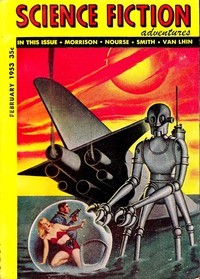
Come into my parlor
Written by Charles E. Fritch
Chaptra reads alongside you — AI insights, chapter breakdowns and reader discussions for every book. Join free
About this book
Reading guide
Themes, characters and key ideas in Come into my parlor, written by Chaptra AI.
- about 8 hours
- intermediate
- dark
- mysterious
- paranoid
Charles E. Fritch's "Come into my parlor" is a chilling 1950s science fiction novella that masterfully blurs the lines between sanity and madness. The story follows newspaper reporter Charlie Bennet as he grapples with the increasingly disturbing delusions of his friend Johnny, who claims to see giant, invisible spiders disguising themselves as humans. What begins as drunken ramblings escalates into a terrifying psychological ordeal, forcing Charlie to confront the fragility of perception and the terrifying possibility that Johnny's grotesque visions might hold an unsettling truth. The narrative builds intense paranoia and suspense, culminating in a violent climax that leaves the reader questioning the very nature of reality.
“"They're everywhere, Charlie. Hiding in plain sight. You just haven't learned to see them yet."”
Key themes
- Perception vs. Reality
- This is the central pillar of the novella, exploring the subjective nature of truth. The story constantly challenges the reader (and Charlie) to question what is real and what is imagined. The invisible spiders serve as a powerful metaphor for the idea that our senses might only grasp a fraction of existence, and that a different perception could reveal a terrifying, unseen world.
- Sanity vs. Madness
- The novella deeply delves into the fragility of the human mind and the terrifying ease with which one can slip from sanity into profound delusion. Johnny's journey is a stark portrayal of mental breakdown, while Charlie's struggle highlights the contagious nature of fear and paranoia, and the difficulty of maintaining one's own mental equilibrium when confronted with another's unraveling.
- Paranoia and the Unseen Threat
- Fritch taps into deep-seated human fears of hidden dangers and unseen enemies. Johnny's paranoia about invisible spiders reflects broader societal anxieties, particularly pertinent in the 1950s Cold War era with its pervasive fear of communist infiltration and atomic threats. The 'unseen threat' creates an atmosphere of constant dread and suspicion, as anyone could be 'one of them'.
Worth discussing
How does Fritch manipulate the reader's perception of reality throughout the story, and how effective is this technique?
Chapter-by-chapter breakdowns, character arcs and the full thematic analysis come with a free account.
Discussions
No one has started one yet
Questions this book opens up
No discussions yet
Be the first to start a discussion about this book!
Sign up to start the discussionReviews
No reviews yet
Be the first to review this book!