
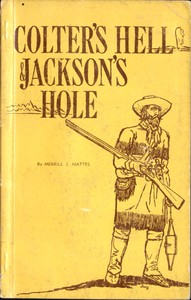
Colter's Hell and Jackson's Hole: The Fur Trappers' Exploration of the Yellowstone and Grand Teton Park Region
Written by Merrill J. Mattes
Chaptra reads alongside you — AI insights, chapter breakdowns and reader discussions for every book. Join free
About this book
Reading guide
Themes, characters and key ideas in Colter's Hell and Jackson's Hole: The Fur Trappers' Exploration of the Yellowstone and Grand Teton Park Region, written by Chaptra AI.
- about 10 hours
- intermediate
- historical
- adventurous
- informative
Merrill J. Mattes's "Colter's Hell and Jackson's Hole" offers a meticulously researched historical account of the fur trappers' vital, yet largely uncredited, explorations of the Yellowstone and Grand Teton regions. The book centers on figures like John Colter, detailing their arduous journeys through the magnificent and challenging landscapes long before the areas were designated national parks. Mattes corrects historical inaccuracies, particularly concerning the legendary "Colter's Hell," and illuminates how these early adventurers laid the groundwork for future expeditions and understanding of the American West. It serves as an essential re-evaluation of the frontier narrative, emphasizing the trappers' significant contributions to geographical knowledge and the broader story of westward expansion. Ultimately, the work champions the legacy of these forgotten pathfinders, connecting their pursuit of beaver furs to the enduring allure and historical significance of these iconic natural wonders.
“For thirty years prior to the Washburn-Langford-Doane expedition in the 1870s, fur trappers explored these lands yet remained largely uncredited in history.”
Key themes
- Exploration and Discovery
- This theme is central, focusing on the human drive to venture into unknown territories. Mattes highlights the arduous journeys of the fur trappers, particularly John Colter, as they navigated and mapped the Yellowstone and Grand Teton regions. It explores the challenges, dangers, and the sheer grit required to discover and document these natural wonders, emphasizing that these explorations were driven by both economic incentives (beaver fur) and an innate sense of adventure.
- Uncredited History and Historical Revisionism
- Mattes's primary argument is that the fur trappers, who spent decades exploring the region, have been largely overlooked in historical accounts, with credit often given to later, more formal expeditions. The book seeks to correct this historical oversight, advocating for the rightful recognition of these early pioneers. It questions how history is written, who gets remembered, and the biases that can shape our understanding of the past.
- Man and Wilderness
- This theme explores the complex relationship between human beings and the untamed natural world. The book depicts the wilderness (Yellowstone, Grand Teton) as both a source of immense beauty and resources, and a formidable, often hostile, environment that tests human limits. It showcases the trappers' intimate knowledge, resilience, and survival skills in a landscape that was simultaneously awe-inspiring and life-threatening.
Worth discussing
How does Mattes's book challenge or confirm your previous understanding of the discovery of Yellowstone and Grand Teton?
Chapter-by-chapter breakdowns, character arcs and the full thematic analysis come with a free account.
Discussions
No one has started one yet
Questions this book opens up
No discussions yet
Be the first to start a discussion about this book!
Sign up to start the discussionReviews
No reviews yet
Be the first to review this book!