
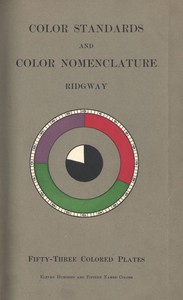
Color Standards and Color Nomenclature: With fifty-three colored plates and eleven hundred and fifteen named colors
Written by Robert Ridgway
Chaptra reads alongside you — AI insights, chapter breakdowns and reader discussions for every book. Join free
About this book
Reading guide
Themes, characters and key ideas in Color Standards and Color Nomenclature: With fifty-three colored plates and eleven hundred and fifteen named colors, written by Chaptra AI.
- about 12 hours
- advanced
- informative
- systematic
- precise
Robert Ridgway's "Color Standards and Color Nomenclature" is a seminal early 20th-century scientific reference work designed to bring order to the chaotic world of color description. Driven by the critical need for precise communication in natural sciences and industry, Ridgway meticulously compiled a systematic nomenclature for 1,115 named colors. The book features 53 vibrantly colored plates, providing visual anchors for his detailed classification system based on the solar spectrum. Through a rigorous approach, Ridgway aimed to establish an objective standard, outlining his motivations, challenges, and methodology in the foundational preface before presenting the comprehensive color catalog.
“The chaotic state of color nomenclature has long been a serious handicap to progress in many branches of science, especially those in which the accurate description of natural objects is essential.”
Key themes
- Standardization and Order
- This is the foundational theme of the entire work. Ridgway's primary motivation is to combat the 'chaos' of inconsistent color nomenclature by imposing a systematic, standardized order. The book itself is the embodiment of this theme, providing a comprehensive framework for identifying, naming, and communicating colors precisely. It reflects a deep-seated scientific impulse to categorize and bring clarity to complex natural phenomena.
- The Pursuit of Scientific Objectivity
- Ridgway's work is a profound attempt to introduce objectivity into the inherently subjective realm of color perception. By creating a physical reference with standardized names, he sought to remove individual bias and interpretation from color description. This theme explores the scientific method's application to qualitative data, striving for measurable and reproducible results even when dealing with sensory experience. It highlights the challenges and necessity of establishing common ground for observation and reporting.
- The Interplay of Visual and Linguistic Communication
- The book masterfully demonstrates the symbiotic relationship between visual representation and linguistic description. Ridgway understood that neither words alone nor colors alone could suffice for precise communication. The named colors provide a verbal handle, while the plates offer an undeniable visual referent. This theme explores how these two modes of communication work in tandem to convey complex information, bridging the gap between abstract concepts and concrete perceptions. It underscores the limitations of each in isolation and their power when combined.
Worth discussing
To what extent can subjective sensory experiences, like color perception, be objectively standardized and classified?
Chapter-by-chapter breakdowns, character arcs and the full thematic analysis come with a free account.
Discussions
No one has started one yet
Questions this book opens up
No discussions yet
Be the first to start a discussion about this book!
Sign up to start the discussionReviews
No reviews yet
Be the first to review this book!