
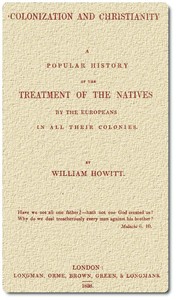
Colonization and Christianity: A popular history of the treatment of the natives by the; Europeans in all their colonies
Written by William Howitt
Chaptra reads alongside you — AI insights, chapter breakdowns and reader discussions for every book. Join free
About this book
Reading guide
Themes, characters and key ideas in Colonization and Christianity: A popular history of the treatment of the natives by the; Europeans in all their colonies, written by Chaptra AI.
- about 12 hours
- advanced
- critical
- indignant
- historical
William Howitt's "Colonization and Christianity" is a seminal 19th-century historical polemic that meticulously details the widespread atrocities committed by European powers against indigenous populations during their colonial expansion. The book serves as a damning indictment of the moral hypocrisy inherent in nations that professed Christian values while simultaneously engaging in systematic violence, oppression, and exploitation. Howitt challenges the prevailing Eurocentric narratives of 'civilization,' presenting a counter-history that exposes the brutal realities of figures like Columbus and the devastating impact of colonization. Through a blend of historical facts and impassioned moral argument, Howitt compels readers to confront the stark contradiction between proclaimed religious piety and the actual practice of imperial conquest, aiming to provoke a fundamental reevaluation of colonial history.
“"The history of European colonization is, with few exceptions, the history of the most atrocious crimes against humanity, perpetrated by nations who boasted of their Christianity and civilization."”
Key themes
- Colonialism and its Atrocities
- This is the central theme, meticulously explored through historical accounts of violence, exploitation, land theft, and genocide perpetrated by European powers. Howitt details the systematic nature of these crimes, challenging any notion of 'civilizing missions.'
- Religious Hypocrisy
- Howitt vehemently critiques the stark contradiction between the Christian values professed by European colonizers (love, charity, peace) and their actual practices of cruelty, greed, and violence. He argues that Christianity was often used as a justification or a veneer for exploitation.
- Historical Revisionism and Moral Accountability
- Howitt's entire project is an act of historical revisionism, challenging prevailing narratives that glorified European expansion. He argues for a moral accountability that transcends national pride, urging readers to confront uncomfortable truths about their past and the legacies of colonialism.
Worth discussing
How does Howitt challenge the prevailing narratives of European exploration and 'discovery' prevalent in his time? What specific examples does he use to dismantle these myths?
Chapter-by-chapter breakdowns, character arcs and the full thematic analysis come with a free account.
Discussions
No one has started one yet
Questions this book opens up
No discussions yet
Be the first to start a discussion about this book!
Sign up to start the discussionReviews
No reviews yet
Be the first to review this book!