
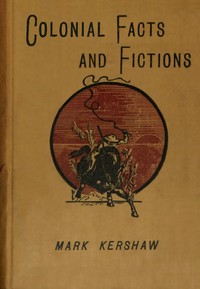
Colonial facts and fictions: Humorous sketches
Written by John Milne
Chaptra reads alongside you — AI insights, chapter breakdowns and reader discussions for every book. Join free
About this book
Reading guide
Themes, characters and key ideas in Colonial facts and fictions: Humorous sketches, written by Chaptra AI.
- about 6 hours
- intermediate
- humorous
- satirical
- observational
John Milne's "Colonial Facts and Fictions: Humorous Sketches" is a late 19th-century collection offering a satirical and entertaining look at life in colonial Australia. Through the eyes of a traveler, the book navigates the unique customs, landscapes, and inhabitants, blending factual observations with whimsical imaginings. The narrative begins with the narrator's arrival in Port Darwin, immediately immersing the reader in the oddities of colonial society. Milne employs comedic storytelling and vivid descriptions to highlight cultural misunderstandings, particularly in interactions between white settlers and indigenous people, such as the humorous anecdote involving an aboriginal man named Charlie. Ultimately, the collection serves as a charming yet revealing snapshot of a bygone era, using humor to explore the complexities and peculiarities of colonial existence.
“"Upon landing at Port Darwin, one immediately senses the peculiar blend of the untamed wilderness and the earnest, if somewhat misplaced, efforts of civilization."”
Key themes
- Colonialism and its Peculiarities
- This theme explores the unique and often absurd aspects of establishing and living within a colonial society. Milne highlights the attempts to transplant European customs and values into a vastly different environment, leading to humorous clashes, adaptations, and unexpected outcomes. It delves into the daily lives, challenges, and social structures of the colonists.
- Cultural Misunderstanding and Clash
- Central to the book's humor and underlying commentary is the theme of cultural misunderstanding, particularly between the European settlers and the indigenous aboriginal populations. Milne presents these clashes as sources of amusement, but they also implicitly reveal the inherent difficulties, biases, and power imbalances present in cross-cultural interactions during the colonial era.
- Satire and Humor as Social Commentary
- Milne employs a lighthearted, satirical, and anecdotal style to provide commentary on colonial society. The humor often arises from irony, exaggeration, and the juxtaposition of expectations versus reality. This theme explores how comedy can be used to observe, critique, and make sense of complex social phenomena, even if the critique is gentle rather than sharp.
Worth discussing
How does Milne use humor to comment on colonial life? Is this an effective method for social critique?
Chapter-by-chapter breakdowns, character arcs and the full thematic analysis come with a free account.
Discussions
No one has started one yet
Questions this book opens up
No discussions yet
Be the first to start a discussion about this book!
Sign up to start the discussionReviews
No reviews yet
Be the first to review this book!