
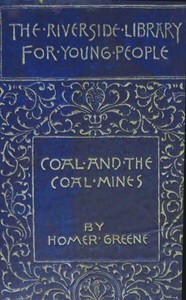
Coal and the coal mines
Written by Homer Greene
Chaptra reads alongside you — AI insights, chapter breakdowns and reader discussions for every book. Join free
About this book
Reading guide
Themes, characters and key ideas in Coal and the coal mines, written by Chaptra AI.
- about 8 hours
- intermediate
- informative
- educational
- historical
Homer Greene's "Coal and the Coal Mines" is a late 19th-century scientific treatise that meticulously details the geological origins of coal and the evolution of the coal mining industry, particularly within the United States. The book commences by addressing the fundamental question of coal formation, exploring deep geological history from the Nebular Hypothesis through the Carboniferous period, emphasizing the role of ancient vegetation and planetary forces. Greene elucidates the structure of coal beds and the practical aspects of coal extraction, presenting complex scientific concepts in an accessible manner. Ultimately, the work underscores coal's profound significance as a natural resource, vital for economic growth and industrial advancement during its era.
“The colossal forces of nature, operating over eons, have laid down the very foundations of our industrial might.”
Key themes
- The Majesty of Geological Time and Processes
- Greene extensively details the millions of years and immense natural forces (tectonic shifts, sedimentation, ancient climates) required for coal formation. This theme emphasizes the vast scale of Earth's history and the slow, powerful work of geological processes that underpin human civilization.
- The Indispensable Value of Coal and Natural Resources
- The book consistently underscores coal's critical role as an energy source, a driver of industrialization, and a foundation for economic prosperity in the late 19th century. It positions coal as the 'black gold' fueling progress and shaping national destinies.
- Human Ingenuity and Industrial Development
- Greene details the evolution of mining techniques, equipment, and the organization of the coal industry. This theme celebrates human innovation in extracting resources and building the infrastructure necessary for an industrial society, showcasing the practical application of scientific understanding.
Worth discussing
How did the scientific understanding of coal formation in the late 19th century compare to modern geological theories?
Chapter-by-chapter breakdowns, character arcs and the full thematic analysis come with a free account.
Discussions
No one has started one yet
Questions this book opens up
No discussions yet
Be the first to start a discussion about this book!
Sign up to start the discussionReviews
No reviews yet
Be the first to review this book!