
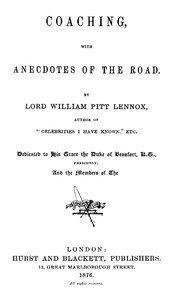
Coaching, with Anecdotes of the Road
Written by William Pitt Lennox
Chaptra reads alongside you — AI insights, chapter breakdowns and reader discussions for every book. Join free
About this book
Reading guide
Themes, characters and key ideas in Coaching, with Anecdotes of the Road, written by Chaptra AI.
- about 9 hours
- intermediate
- nostalgic
- informative
- observational
Lord William Pitt Lennox's "Coaching, with Anecdotes of the Road" is a nostalgic and detailed exploration of the golden age of horse-drawn coaching in England, observed through the author's personal experiences and keen social commentary. Published as railways began to dominate travel, the book serves as both a memoir and a historical document, capturing the vibrant culture of the road, the characters encountered, and the intricate art of coaching itself. Lennox interweaves practical descriptions of coaching techniques and routes with a rich tapestry of humorous, poignant, and insightful anecdotes, offering a vivid snapshot of 19th-century British society and its evolving modes of travel.
“"There is no greater luxury than being whirled along a good road, behind four high-mettled horses, with a skilful whip handling the ribbons."”
Key themes
- Nostalgia for a Bygone Era
- The dominant theme, as Lennox frequently contrasts the perceived romance, adventure, and social camaraderie of coaching with the speed and impersonality of railway travel. He looks back with fondness on the 'golden age' of coaching, lamenting its decline as a loss of character and a unique way of life.
- Social Change and Progress
- The book serves as a chronicle of a significant social transformation—the shift from horse-drawn transport to steam power. Lennox examines the impact of this 'progress' not just on travel logistics but on societal structures, employment (e.g., coachmen, innkeepers), and the very fabric of communal life along the routes.
- The Culture of Travel
- Lennox delves into the distinct culture surrounding 19th-century travel by coach, encompassing everything from the etiquette of passengers to the customs of inns and the particular argot of coachmen. It highlights travel not merely as a means to an end, but as a rich social experience in itself.
Worth discussing
How does Lennox's perspective on coaching reflect the social and technological anxieties of the mid-19th century?
Chapter-by-chapter breakdowns, character arcs and the full thematic analysis come with a free account.
Discussions
No one has started one yet
Questions this book opens up
No discussions yet
Be the first to start a discussion about this book!
Sign up to start the discussionReviews
No reviews yet
Be the first to review this book!