
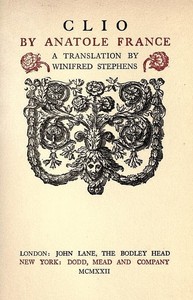
Clio
Written by Anatole France
Chaptra reads alongside you — AI insights, chapter breakdowns and reader discussions for every book. Join free
About this book
Reading guide
Themes, characters and key ideas in Clio, written by Chaptra AI.
- about 8 hours
- advanced
- reflective
- philosophical
- poignant
Anatole France's "Clio" delves into the reflective life of an aged wandering bard, known as the Aged One, as he journeys back to his hometown of Kyme. Through his interactions with nature, his former slave Melantho, and local children, the narrative explores profound philosophical themes concerning the passage of time, the transience of human life, and the enduring power of art and memory. The book masterfully weaves together elements of poetry, history, and personal contemplation, presenting a poignant meditation on legacy and the human condition against a backdrop of ancient Hellenic culture. It highlights the bard's struggle with his own mortality while affirming the immortal nature of the stories and songs he preserves and imparts.
“The songs we sing are but whispers against the roar of time, yet in those whispers, eternity resides.”
Key themes
- The Immortality of Art and Legacy
- This theme explores how artistic creation, particularly poetry and song, transcends individual mortality to achieve a form of immortality. The Aged One's dedication to his craft and his role in preserving history through performance highlights art as a vessel for enduring human spirit and memory.
- The Passage of Time and Mortality
- The narrative deeply engages with the concept of time's relentless flow and the inevitability of aging and death. The Aged One's reflections on his past, his weariness, and his contemplation of his final return to Kyme underscore the transient nature of individual life, contrasting it with the permanence of history and art.
- Memory and Cultural Identity
- The book examines how individual and collective memory shapes identity. The Aged One serves as a living repository of his people's history, myths, and struggles. His songs and stories are not just entertainment but vital tools for remembering the past and defining who they are as a people.
Worth discussing
How does France portray the relationship between individual memory and collective cultural identity?
Chapter-by-chapter breakdowns, character arcs and the full thematic analysis come with a free account.
Discussions
No one has started one yet
Questions this book opens up
No discussions yet
Be the first to start a discussion about this book!
Sign up to start the discussionReviews
No reviews yet
Be the first to review this book!