
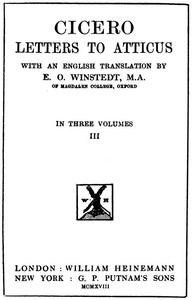
Cicero: Letters to Atticus, Vol. 3 of 3
Written by Marcus Tullius Cicero
Chaptra reads alongside you — AI insights, chapter breakdowns and reader discussions for every book. Join free
About this book
Reading guide
Themes, characters and key ideas in Cicero: Letters to Atticus, Vol. 3 of 3, written by Chaptra AI.
- about 12 hours
- advanced
- reflective
- somber
- philosophical
Cicero: Letters to Atticus, Vol. 3 of 3 offers an intimate glimpse into the mind of Marcus Tullius Cicero during the tumultuous final years of the Roman Republic, specifically following Caesar's victory in 46 BC. This collection of personal correspondence to his trusted friend Atticus reveals Cicero's profound grief over the death of his daughter Tullia, his struggle to reconcile with the new political order under Caesar, and his retreat into philosophical writing. The letters serve as a poignant testament to enduring friendship amidst personal tragedy and political upheaval, providing invaluable primary source material for understanding a pivotal era in Roman history. They underscore Cicero's intellectual depth, emotional vulnerability, and unwavering, albeit often despairing, commitment to republican ideals.
“What solace is there in life, my Atticus, when my dearest Tullia is gone? My very soul is rent asunder.”
Key themes
- Friendship and Loyalty
- The enduring friendship between Cicero and Atticus is the bedrock of this collection. Their correspondence showcases a deep bond built on trust, mutual respect, and shared intellectual pursuits. Atticus serves as Cicero's primary confidant, offering emotional support, practical advice, and a stable presence amidst personal tragedy and political chaos. The letters themselves are a testament to the power and necessity of true friendship.
- Grief and Loss
- A dominant theme, particularly in the earlier parts of this volume, is Cicero's profound and overwhelming grief over the death of his beloved daughter, Tullia. The letters offer an unvarnished look at his sorrow, his attempts to find solace, and his struggle with existential questions prompted by her loss. This personal tragedy significantly influences his philosophical work and his retreat from active politics.
- The Fate of the Roman Republic
- Underpinning all of Cicero's personal struggles is the overarching political crisis of the Roman Republic. Having witnessed its decline and the triumph of Caesar's autocratic rule, Cicero grapples with the loss of traditional liberties, the erosion of republican institutions, and the uncertain future of Rome. His letters are filled with reflections on the nature of tyranny, the responsibilities of a citizen, and the despair of seeing cherished ideals crumble.
Worth discussing
How does Cicero's personal grief over Tullia's death influence his political outlook and philosophical pursuits in this volume?
Chapter-by-chapter breakdowns, character arcs and the full thematic analysis come with a free account.
Discussions
No one has started one yet
Questions this book opens up
No discussions yet
Be the first to start a discussion about this book!
Sign up to start the discussionReviews
No reviews yet
Be the first to review this book!