
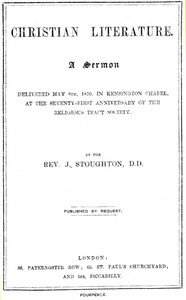
Christian Literature: a sermon delivered May 8th, 1870, in Kensington Chapel, at the seventy-first anniversary of the Religious Tract Society
Written by John Stoughton
Chaptra reads alongside you — AI insights, chapter breakdowns and reader discussions for every book. Join free
About this book
Reading guide
Themes, characters and key ideas in Christian Literature: a sermon delivered May 8th, 1870, in Kensington Chapel, at the seventy-first anniversary of the Religious Tract Society, written by Chaptra AI.
- about 2 hours
- intermediate
- inspirational
- didactic
- reverent
John Stoughton's 1870 sermon, "Christian Literature," delivered at the Religious Tract Society's 71st anniversary, serves as a powerful testament to the Victorian era's fervent religious landscape and its commitment to evangelism through print. Stoughton meticulously argues for the indispensable role of Christian literature, from the foundational Bible to diverse supporting texts, in disseminating Christian truth and fostering moral living. He underscores the historical impact and ongoing necessity of such works for individual spiritual growth and the collective welfare of society. The sermon champions the Religious Tract Society as a crucial vehicle for this mission, advocating for a broad engagement with texts that align with Christian values to inspire and convert. Ultimately, it is a call to action for the promotion and study of literature that nurtures faith and ethical conduct.
“The printed page, when sanctified by truth, becomes a silent yet potent preacher, reaching where no voice can penetrate.”
Key themes
- The Power and Purpose of Christian Literature
- This is the central theme, exploring how written words, especially those imbued with Christian truth, serve as potent instruments for spreading faith, educating, and moral guidance. Stoughton emphasizes literature's role as a silent preacher and a vehicle for eternal truths.
- Evangelism and Spiritual Edification
- The sermon strongly advocates for literature as a primary means of evangelism—bringing individuals to faith—and for the ongoing spiritual nourishment and moral development of believers. It highlights literature's role in personal growth and conversion.
- The Role of Institutions and Collective Responsibility
- Stoughton underscores the vital function of organizations like the Religious Tract Society in facilitating the widespread dissemination of Christian literature. This theme emphasizes the collective obligation of the community to support such endeavors for societal good.
Worth discussing
How does Stoughton's argument for 'diversifying literature' with Christian values resonate or conflict with contemporary views on secular and religious texts?
Chapter-by-chapter breakdowns, character arcs and the full thematic analysis come with a free account.
Discussions
No one has started one yet
Questions this book opens up
No discussions yet
Be the first to start a discussion about this book!
Sign up to start the discussionReviews
No reviews yet
Be the first to review this book!