
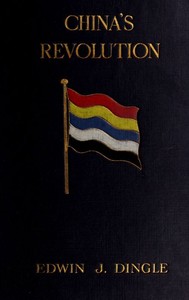
China's Revolution, 1911-1912: A Historical and Political Record of the Civil War
Written by Edwin John Dingle
Chaptra reads alongside you — AI insights, chapter breakdowns and reader discussions for every book. Join free
About this book
Reading guide
Themes, characters and key ideas in China's Revolution, 1911-1912: A Historical and Political Record of the Civil War, written by Chaptra AI.
- about 10 hours
- advanced
- historical
- informative
- turbulent
Edwin J. Dingle's "China's Revolution, 1911-1912" offers a crucial firsthand historical and political record of the pivotal civil war that transformed China from an imperial dynasty into a republic. Written by an observer present in Hankow during the upheaval, the book provides unique insights into the complexities, factions, and key figures, such as Sun Yat Sen and General Li Yuan Hung, involved in the revolution's premature outbreak on October 10, 1911. Dingle navigates the challenges of documenting a vast nation in chaos, emphasizing the difficulty of obtaining accurate information. The volume serves as an indispensable primary source for understanding the revolutionary spirit and the intricate political landscape that reshaped China's future in the early 20th century.
“The air in Hankow was thick with anticipation and the acrid smell of gunpowder, a nation holding its breath.”
Key themes
- Revolution and Political Transformation
- This is the overarching theme, detailing the violent and complex process of China's transition from an ancient imperial system to a modern republic. The book explores the causes, catalysts, and immediate consequences of this profound political upheaval, including the collapse of the Manchu dynasty and the rise of republican ideals.
- The Challenge of Historical Documentation and Eyewitness Testimony
- Dingle explicitly addresses the difficulty of obtaining accurate information and constructing a reliable historical record during a time of intense chaos and civil war. This theme highlights the subjective nature of history, the role of the observer, and the limitations and strengths of firsthand accounts.
- Leadership and Factionalism in Revolution
- This theme examines the roles of key leaders like Sun Yat Sen and General Li Yuan Hung, as well as the dynamics between the various revolutionary factions. It delves into how leadership emerges during crisis, the ideological differences that can divide a movement, and the strategic alliances necessary for revolutionary success.
Worth discussing
How does Dingle's firsthand account differ from later historical interpretations of the 1911 Revolution, and what are the implications of these differences?
Chapter-by-chapter breakdowns, character arcs and the full thematic analysis come with a free account.
Discussions
No one has started one yet
Questions this book opens up
No discussions yet
Be the first to start a discussion about this book!
Sign up to start the discussionReviews
No reviews yet
Be the first to review this book!