
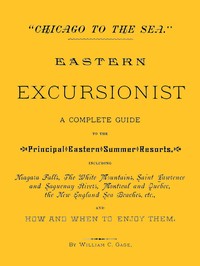
"Chicago to the Sea." Eastern Excursionist: A complete guide to the principal eastern summer resorts, including: Niagara Falls, the White Mountains, Saint Lawrence and Saguenay Rivers, Montreal and Quebec, the New England sea beaches, etc., and how and when to enjoy them.
Written by William C. Gage
Chaptra reads alongside you — AI insights, chapter breakdowns and reader discussions for every book. Join free
About this book
Reading guide
Themes, characters and key ideas in "Chicago to the Sea." Eastern Excursionist: A complete guide to the principal eastern summer resorts, including: Niagara Falls, the White Mountains, Saint Lawrence and Saguenay Rivers, Montreal and Quebec, the New England sea beaches, etc., and how and when to enjoy them., written by Chaptra AI.
- about 8 hours
- intermediate
- Informative
- Practical
- Historical
William C. Gage's "Chicago to the Sea: Eastern Excursionist" is a comprehensive late 19th-century travel guide designed for tourists embarking on summer journeys from Chicago to the eastern United States. The book meticulously details routes, accommodations, and attractions for popular resorts such as Niagara Falls, the White Mountains, and the New England sea beaches. It emphasizes the importance of leisure travel for relaxation and enjoyment, leveraging the comforts and efficiency of modern railway travel, particularly the Michigan Central Railroad. The guide's primary aim is to equip excursionists with practical information, ensuring they can fully appreciate and maximize their travel experience to these scenic destinations. It serves as both an itinerary planner and a promotional piece for the benefits of organized tourism during the era.
“The importance of summer travel for relaxation and enjoyment amid the pressures of daily work cannot be overstated.”
Key themes
- Leisure and Recreation
- This is the central theme, emphasizing the societal importance of taking a break from work for relaxation and enjoyment. The guide frames summer travel not just as a luxury, but as a necessary component of a balanced life, offering restoration from the 'pressures of daily work.' It highlights how specific destinations are designed for leisure pursuits.
- The Allure of Nature and Scenic Beauty
- The guide heavily promotes the natural wonders and picturesque landscapes of the eastern United States. Destinations like Niagara Falls and the White Mountains are not merely places to visit, but spectacles of natural grandeur and beauty to be appreciated, suggesting a societal value placed on experiencing and connecting with nature.
- Modernity and the Convenience of Travel
- A significant aspect of the guide is its celebration of late 19th-century technological advancements, particularly in railway travel. The emphasis on 'modern railway travel comforts' like dining cars and sleeping accommodations underscores how technology was transforming the accessibility, speed, and comfort of long-distance journeys, making extensive travel feasible for a broader segment of society.
Worth discussing
How does 'Chicago to the Sea' reflect the social values and leisure priorities of late 19th-century America?
Chapter-by-chapter breakdowns, character arcs and the full thematic analysis come with a free account.
Discussions
No one has started one yet
Questions this book opens up
No discussions yet
Be the first to start a discussion about this book!
Sign up to start the discussionReviews
No reviews yet
Be the first to review this book!