
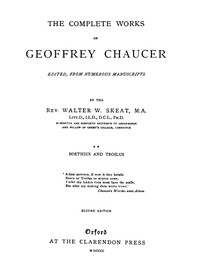
Chaucer's Works, Volume 2 — Boethius and Troilus
Written by Geoffrey Chaucer
Chaptra reads alongside you — AI insights, chapter breakdowns and reader discussions for every book. Join free
About this book
Reading guide
Themes, characters and key ideas in Chaucer's Works, Volume 2 — Boethius and Troilus, written by Chaptra AI.
- about 30 hours
- advanced
- tragic
- philosophical
- romantic
Chaucer's Works, Volume 2 — Boethius and Troilus presents two pivotal medieval texts: Chaucer's translation of Boethius's "De Consolatione Philosophiae" and his original narrative poem "Troilus and Criseyde." The volume explores profound philosophical questions regarding fortune, free will, and the nature of happiness through Boethius's dialogue with Lady Philosophy, juxtaposed with a deeply human and tragic romance. "Troilus and Criseyde" masterfully depicts the rise and fall of a passionate love affair amidst the Trojan War, examining themes of loyalty, betrayal, and the transience of earthly affections. Together, these works showcase Chaucer's intellectual depth and poetic versatility, offering a comprehensive look into 14th-century thought and literary artistry. This collection serves as a cornerstone of English literature, blending classical philosophy with nascent psychological realism.
“O blynde world, O blynde entencioun! How ofte falleth al the effect contraire Of surquidrie and foul presumpcioun!”
Key themes
- Fortune and Free Will
- This theme is central to both works. In Boethius, Lady Philosophy meticulously explains the capricious nature of Fortune's Wheel and debates the compatibility of divine foreknowledge with human free will. In 'Troilus and Criseyde,' the lovers' fate is constantly subject to external forces (the Trojan War, Criseyde's exchange) and the seemingly arbitrary turns of fortune, yet characters also make choices that contribute to their destiny.
- The Nature of Love (Earthly vs. Divine)
- While 'Troilus and Criseyde' is a quintessential courtly love narrative, it ultimately transcends this earthly ideal. The intense, passionate love between Troilus and Criseyde is depicted with all its joys and sorrows, but the poem's conclusion, with Troilus's soul ascending to scorn the 'feyned felicitee' of the world, explicitly contrasts human love with the eternal, unchanging love of God. This philosophical shift echoes the 'Consolation's' emphasis on seeking higher, more stable forms of happiness.
- Betrayal and Loyalty
- This theme forms the tragic core of 'Troilus and Criseyde.' Troilus exemplifies unwavering loyalty and devotion, while Criseyde's ultimate infidelity represents a profound act of betrayal. The poem explores the complexities of such actions, not simply condemning Criseyde but offering insights into the pressures and fears that lead to her change of heart. Loyalty is also seen in Pandarus's initial efforts for Troilus, and the larger context of war involves national loyalties and betrayals.
Worth discussing
How do the philosophical ideas presented in Boethius's 'Consolation' influence or resonate with the narrative and themes of 'Troilus and Criseyde'?
Chapter-by-chapter breakdowns, character arcs and the full thematic analysis come with a free account.
Discussions
No one has started one yet
Questions this book opens up
No discussions yet
Be the first to start a discussion about this book!
Sign up to start the discussionReviews
No reviews yet
Be the first to review this book!