
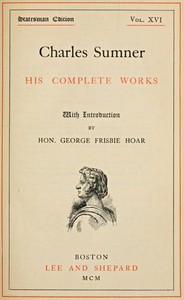
Charles Sumner: his complete works, volume 16 (of 20)
Written by Charles Sumner
Chaptra reads alongside you — AI insights, chapter breakdowns and reader discussions for every book. Join free
About this book
Reading guide
Themes, characters and key ideas in Charles Sumner: his complete works, volume 16 (of 20), written by Chaptra AI.
- about 12 hours
- advanced
- Serious
- Didactic
- Earnest
Volume 16 of Charles Sumner's complete works is a significant historical compilation from the late 19th century, offering a deep dive into the political thought and legislative efforts of the prominent abolitionist and senator during the Reconstruction era. This volume primarily features Sumner's speeches, letters, and discussions, underscoring his unwavering commitment to civil rights, national unity, and democratic principles. It articulates his strong advocacy for equal rights for all citizens, particularly through the lens of manhood suffrage and the rejection of political oligarchies. The collection serves as a powerful testament to the ongoing struggles for equality and the crucial role of government in upholding human rights following the Civil War, setting a compelling tone for his vision of a unified nation.
“"The true Republic is where the rights of all are recognized, without distinction of race or color, and where every man stands equal before the law."”
Key themes
- Civil Rights and Equality
- This is the central pillar of Sumner's work in this volume. He relentlessly argues for the full and equal rights of all citizens, particularly focusing on the rights of formerly enslaved African Americans. He views civil rights not as a privilege but as an inherent entitlement, essential for a truly democratic society. This theme encompasses legal equality, protection under the law, and the right to participate in the political process.
- National Unity and Sovereignty
- Sumner explores the meaning of national unity in the aftermath of the Civil War, arguing that true unity cannot exist without universal equality. He interrogates the relationship between state rights and federal power, asserting that national sovereignty must prevail when it comes to fundamental human rights. His vision of unity is not merely geographical but ideological, rooted in shared principles of justice.
- The Role of Government in Protecting Rights
- Sumner consistently argues that the federal government has a positive and active duty to intervene and protect the civil rights of its citizens, especially when state governments fail to do so or actively suppress them. This theme challenges a strict interpretation of limited government, advocating for a robust federal role in ensuring justice and equality nationwide, particularly in the aftermath of slavery.
Worth discussing
How does Sumner define 'national unity' and what role does civil rights play in achieving it?
Chapter-by-chapter breakdowns, character arcs and the full thematic analysis come with a free account.
Discussions
No one has started one yet
Questions this book opens up
No discussions yet
Be the first to start a discussion about this book!
Sign up to start the discussionReviews
No reviews yet
Be the first to review this book!