
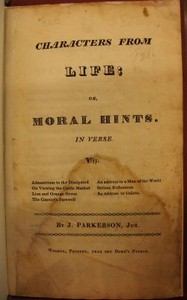
Characters from Life; Or, Moral Hints. In Verse
Written by James Parkerson
Chaptra reads alongside you — AI insights, chapter breakdowns and reader discussions for every book. Join free
About this book
Reading guide
Themes, characters and key ideas in Characters from Life; Or, Moral Hints. In Verse, written by Chaptra AI.
- about 8 hours
- intermediate
- Didactic
- Reflective
- Somber
James Parkerson's "Characters from Life; Or, Moral Hints. In Verse" is an early 19th-century collection of didactic poetry that explores the moral landscape of contemporary society. Through various poetic vignettes, Parkerson offers cautionary tales and reflections on human failings, particularly focusing on the perils of dissipated lifestyles, the grim realities of criminality, and the complexities of personal relationships. The work serves as a moral compass, urging readers to contemplate the far-reaching implications of their choices and to strive for virtuous living. It stands as a significant example of moralistic verse aimed at guiding individuals toward ethical conduct in a rapidly changing world.
“Beware the cup that tempts the soul to stray, / And leads the virtuous from the righteous way.”
Key themes
- Consequences of Excess and Dissipation
- This theme explores the destructive outcomes of intemperate living, particularly excessive drinking and other forms of indulgence. Parkerson illustrates how dissipation leads to a loss of character, financial ruin, social ostracization, and the degradation of personal relationships. It serves as a direct warning against the allure of vice.
- Moral Responsibility and Free Will
- This overarching theme underpins the entire collection, emphasizing the individual's agency in making moral choices and bearing the consequences. Parkerson consistently posits that individuals possess the free will to choose between virtue and vice, and that their ultimate fate is a direct result of these choices. The poems serve as a call to conscious, ethical decision-making.
- Crime and Punishment
- Parkerson delves into the moral and emotional landscape surrounding criminal acts and their subsequent penalties. This theme focuses less on the mechanics of crime and more on the profound regret, sorrow, and familial separation experienced by those who transgress societal and legal boundaries. It highlights the lasting impact of crime on both the perpetrator and their loved ones.
Worth discussing
How effective is poetry as a medium for moral instruction, as exemplified by Parkerson's work?
Chapter-by-chapter breakdowns, character arcs and the full thematic analysis come with a free account.
Discussions
No one has started one yet
Questions this book opens up
No discussions yet
Be the first to start a discussion about this book!
Sign up to start the discussionReviews
No reviews yet
Be the first to review this book!