
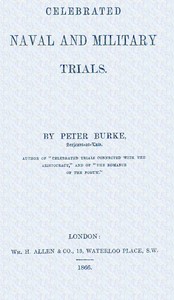
Celebrated naval and military trials
Written by Peter Burke
Chaptra reads alongside you — AI insights, chapter breakdowns and reader discussions for every book. Join free
About this book
This work by Burke, Peter offers readers a unique literary experience. The narrative explores themes of courts-martial and courts of inquiry and trials (military offenses).
Reading guide
Themes, characters and key ideas in Celebrated naval and military trials, written by Chaptra AI.
- about 15 hours
- advanced
- Historical
- Legal
- Serious
Peter Burke's "Celebrated Naval and Military Trials" is a comprehensive historical compilation detailing significant legal proceedings within the British armed forces. This work delves into a series of courts-martial and civil trials that shaped military law, discipline, and societal perceptions of justice from the 17th to 19th centuries. Through meticulous recounting of accusations, testimonies, defenses, and verdicts, Burke offers a stark look at the challenges of maintaining order, the complexities of honor, and the often severe consequences faced by officers and enlisted personnel. It serves as both a legal history document and a window into the social and political climate of its time, revealing the intricate interplay between individual agency and institutional power.
“"The very essence of military discipline rests upon the swift and unwavering execution of justice."”
Key themes
- Justice and Military Discipline
- This is the central theme, exploring how justice was administered within the hierarchical and often brutal context of the naval and military forces. It examines the tension between maintaining strict discipline, essential for military effectiveness, and ensuring fair legal processes for individuals. The trials highlight the unique challenges of military law, where concepts like 'honor' and 'duty' often superseded civilian legal principles.
- Honor, Duty, and Betrayal
- Many trials revolve around perceived breaches of honor and duty, which were paramount values in the armed forces. The book explores how these abstract concepts translated into concrete accusations and defenses, and the devastating impact of alleged betrayal (e.g., treason, desertion, insubordination) on an individual's reputation and life. It reveals the rigid social codes governing military conduct.
- Power and Authority
- The book explicitly examines the structures of power within the military and the state. Each trial is a demonstration of institutional authority asserting control over individuals. It highlights the vast power wielded by commanding officers, the Crown, and the courts, and the limited recourse available to those accused. The trials often expose abuses of power or the challenges of exercising authority responsibly.
Worth discussing
How do the trials in the book reflect the prevailing social and political values of their respective eras?
Chapter-by-chapter breakdowns, character arcs and the full thematic analysis come with a free account.
Discussions
No one has started one yet
Questions this book opens up
No discussions yet
Be the first to start a discussion about this book!
Sign up to start the discussionReviews
No reviews yet
Be the first to review this book!