
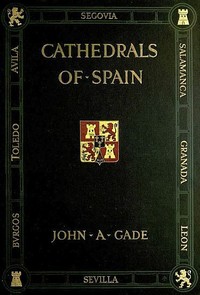
Cathedrals of Spain
Written by John A. (John Allyne) Gade
Chaptra reads alongside you — AI insights, chapter breakdowns and reader discussions for every book. Join free
About this book
Reading guide
Themes, characters and key ideas in Cathedrals of Spain, written by Chaptra AI.
- about 8 hours
- intermediate
- Informative
- Historical
- Descriptive
John A. Gade's "Cathedrals of Spain" is an early 20th-century architectural guide that meticulously chronicles the history, design, and cultural significance of Spain's iconic cathedrals. The book serves as a detailed exploration for both casual tourists and serious architectural students, presenting complex structural and historical information accessibly. Gade frames these magnificent edifices not merely as religious structures but as vital reflections of various historical epochs and cultural shifts in Spain. He delves into specific examples, such as the cathedrals of Salamanca, to illustrate the convergence of diverse architectural styles like Romanesque and Gothic, and the historical narratives that shaped their construction. Ultimately, Gade's work provides a foundational understanding of Spanish cathedral architecture, inviting readers to appreciate the profound interplay between aesthetic beauty and historical context.
“The cathedrals of Spain stand not merely as monuments of faith, but as colossal chronicles etched in stone, each arch and buttress a testament to epochs long past.”
Key themes
- Architectural Evolution and Synthesis
- This theme explores how Spanish cathedrals are not monolithic in style but represent a dynamic interplay and evolution of various architectural forms, particularly Romanesque and Gothic. Gade highlights how different periods and influences (e.g., Moorish, French, indigenous Spanish interpretations) contributed to unique syntheses, creating distinct regional styles.
- Cathedrals as Historical and Cultural Reflections
- Gade emphasizes that cathedrals are more than just religious buildings; they are tangible manifestations of Spain's historical narrative, cultural identity, and societal values. They reflect political power shifts, religious fervor, economic prosperity, and the artistic sensibilities of their respective eras, serving as 'chronicles etched in stone.'
- The Interplay of Faith and Human Endeavor
- This theme explores the profound connection between religious devotion and the monumental human effort, skill, and resources poured into constructing these sacred spaces. It highlights the spiritual aspirations that drove centuries of labor, artistic innovation, and engineering prowess, seeing the cathedrals as expressions of collective faith.
Worth discussing
How do Gade's descriptions of architectural styles in Spain, particularly the Romanesque and Gothic, inform our understanding of the cultural values of their respective eras?
Chapter-by-chapter breakdowns, character arcs and the full thematic analysis come with a free account.
Discussions
No one has started one yet
Questions this book opens up
No discussions yet
Be the first to start a discussion about this book!
Sign up to start the discussionReviews
No reviews yet
Be the first to review this book!