
The AI reading companion for people who take books seriously
AI insights, chapter breakdowns, community discussions — all in one place.
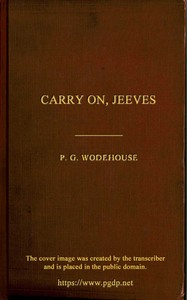
Carry On, Jeeves
About this book
More by P. G. (Pelham Grenville) Wodehouse
Browse all books by this authorExplore British Books
Discover more British literature
Click "Read now" to open in our Reader with AI features.
Community Discussions
Join the conversation about this book
Discussions
0 discussions
No discussions yet
Be the first to start a discussion about this book!
Sign up to start the discussionAI-Powered Insights
A clearer way to understand Carry On, Jeeves through themes, characters, and key ideas
This reading guide highlights what stands out in Carry On, Jeeves through 4 core themes, 5 character profiles, and 6 chapter-level ideas. It is meant to help readers decide whether the book fits their taste and deepen the reading once they begin.
About this book
A quick AI guide to “Carry On, Jeeves”
Get the shape of the book before you commit: what it is about, what mood it carries, and what ideas readers tend to stay with afterward.
What the book is doing
P.G. Wodehouse's "Carry On, Jeeves" is a delightful collection of short stories that introduces the iconic duo of Bertie Wooster, a well-meaning but perpetually clueless young gentleman, and his preternaturally intelligent valet, Jeeves. Set in the opulent yet often absurd world of early 20th-century British aristocracy, the book chronicles Bertie's various predicaments—often involving unwanted engagements, misguided attempts to help friends, or clashes with formidable aunts—from which Jeeves invariably extracts him with effortless ingenuity. Through a series of humorous escapades, Wodehouse masterfully explores themes of class dynamics, the nature of intelligence, and the enduring power of friendship, all delivered with his signature witty prose and intricate plotting. The collection firmly establishes the beloved dynamic that would define the Jeeves and Wooster saga for decades.
Key Themes
Intelligence vs. Naivete
This is the central thematic contrast of the book, embodied by Jeeves's profound intelligence and Bertie's endearing naivete. Jeeves represents a sharp, practical, and often manipulative intellect, while Bertie embodies good intentions coupled with a lack of foresight and understanding of human complexities. The humor arises from the clash and collaboration of these two distinct forms of 'knowing' the world.
Class and Social Hierarchy
The book subtly yet consistently explores the dynamics of class in early 20th-century Britain. While Bertie is an aristocrat, it is his valet, Jeeves, who possesses true intelligence and power, often manipulating the 'superiors' to achieve desired outcomes. This inversion of the traditional master-servant relationship provides much of the comedic tension and a quiet commentary on merit versus inherited status.
“It is a curious thing, but I have always found that the most effective way of dealing with a difficult situation is to simply ignore it.”
Discuss the unique dynamic between Bertie Wooster and Jeeves. How does their relationship defy typical master-servant roles?
See chapter-by-chapter takeaways, deeper character arcs, and a fuller literary analysis built around this book.
Unlock full AI analysis for “Carry On, Jeeves”
Chapter breakdowns, character deep-dives, and thematic analysis — all in one place.
Reader Reviews
See what others are saying
Reviews
Overall Rating
Based on community ratings
No reviews yet
Be the first to review this book!
Readers Also Enjoyed
Discover more books similar to Carry On, Jeeves