
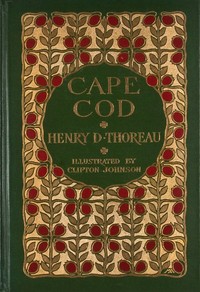
Cape Cod
Written by Henry David Thoreau
Chaptra reads alongside you — AI insights, chapter breakdowns and reader discussions for every book. Join free
About this book
Read it with a club
Small groups reading the same books and talking as they go.


News
- 4 members
- 1,813 discussions
- Active Sep 11
Read Cape Cod alongside people who are reading it too.
Also here: News Bulletin, Just Joking....
Chaptra Prime — paid clubs, every club feature, and unlimited reading support, for $5 a month or $60 once.
See PrimeReading guide
Themes, characters and key ideas in Cape Cod, written by Chaptra AI.
- about 10 hours
- advanced
- reflective
- observational
- philosophical
Henry David Thoreau's "Cape Cod" is a profound travelogue and philosophical reflection chronicling his journeys through the distinctive landscapes of Cape Cod in the mid-19th century. Blending detailed natural observation with deep introspection, Thoreau explores the rugged beauty of the coast, the lives of its resilient inhabitants, and the profound indifference and power of the sea. The narrative begins with a somber account of a shipwreck, which immediately sets a philosophical tone, prompting reflections on life, death, and humanity's place within the vast natural world. Through his encounters and observations, Thoreau crafts a unique blend of geographical survey, social commentary, and existential inquiry, making the book a seminal work in American nature writing.
“A man may stand there and put all America behind him.”
Key themes
- Nature's Power and Indifference
- This is a central theme, exemplified by the sea itself. Thoreau constantly emphasizes the ocean's immense, uncontrollable power and its utter indifference to human life and suffering. The sea is both a source of livelihood and a force of destruction, humbling human endeavor and prompting reflections on mortality.
- Individualism and Self-Reliance
- Consistent with Thoreau's broader philosophy, the book champions the individual's ability to observe, reflect, and find truth independently. His solitary walks and unique interpretations of the natural world underscore the importance of personal experience and intellectual autonomy, often contrasting with societal norms or collective views.
- Mortality and Existence
- Prompted explicitly by the shipwreck, Thoreau frequently muses on the fragility of human life, the inevitability of death, and the broader question of human purpose in the face of nature's vastness. The constant presence of death on the coast (shipwrecks, harsh conditions) forces a confrontation with existential questions.
Worth discussing
How does the shipwreck in the opening chapter set the tone and philosophical framework for the rest of the book?
Chapter-by-chapter breakdowns, character arcs and the full thematic analysis come with a free account.
Discussions
No one has started one yet
Questions this book opens up
No discussions yet
Be the first to start a discussion about this book!
Sign up to start the discussionReviews
No reviews yet
Be the first to review this book!